In 2026, a modern phone system must go well beyond basic calling. Core requirements now include built-in AI for smarter call handling and transcription, real-time analytics dashboards for visibility and control, flexible auto attendants to route calls efficiently, seamless Microsoft Teams integration, and robust mobile apps that support hybrid and remote work. Clear separation between business and personal calls protects work-life balance, while reliable white-glove support ensures these capabilities work smoothly in real-world environments as communication needs evolve.
As the industry-standard cloud phone system, we’ve built a PBX designed to be the perfect telecommunications backbone for any organization, the foundation of a robust, scalable, and secure communications ecosystem. The Vodia PBX is the most feature-rich available, with an immense suite of features, but we’ve pared this staggering list down to seven core features we think any enterprise or SMB needs for impeccable communications in 2026. Let’s take a look:
1. AI (Artificial Intelligence)
AI is here to stay - it’s now a core component of business operations in just about every industry, from healthcare to hospitality and everything in between, and Vodia is at the Vanguard of AI business communications. The Vodia PBX is a dynamic, robust platform with real-time AI features like OpenAI integration and call transcription via Whisper. We tailor our AI solutions for numerous industries, including healthcare, hospitality, and education, and we integrate with best-in-class AI platforms like ActiveCampaign, monday, and Odoo Cloud. You can also leverage smart communications services on Generative AI with our PBX.
2. Analytics Dashboards
Vodia gives you true call center analytics. Thanks to our feature-rich phone system, businesses of any size can create dynamic call center analytics dashboards, define custom call flows, and generate detailed performance reports: adapt rapidly to changes, enjoy a widescreen view of agent performance and customer interaction in real-time for improved CX, and maintain complete control of your communications infrastructure. We also give businesses a queue overview analytics dashboard to monitor and optimize queue performance - the dashboard provides insights into real-time agent activity, live call distribution, and queue metrics. It also provides users with information regarding abandonment rates, agent efficiency, and historical analytics for call volume.
3. Auto Attendant
Auto Attendant is managed with interactive voice response (IVR) menus - “press 1 if you know the extension, press 2 for the main mailbox”…Auto-Attendant enables organizations to free up employee time by not having to manage calls manually. With Vodia Auto Attendant, calls reach their proper destinations via IVR, instead of employee interaction. Our Auto Attendant gives organizations multiple ways to redirect incoming calls, including time of call, while a menu of pre-recorded responses makes it fast and simple to shortcut numbers for specific departments.
4. Integration with Microsoft Teams
In November of 2024 we announcedMicrosoft has certified the Vodia PBX for use with Teams. This was an important milestone for us on our journey to build the industry’s most innovative business communications platform. With the Vodia phone system, any organization can deploy Teams as an office phone system while enjoying all of the benefits of our menu of B2B communication features. The combination of Vodia and Teams enables secure, integrated voice services in Teams ecosystems. Teams users can make and receive calls via our PBX - and when users dial from Teams, the PBX connects calls to SIP trunks or to devices registered with the PBX. And integrating Teams with the Vodia phone system can reduce your telephony costs by up to 50 percent.
5. Mobile Apps
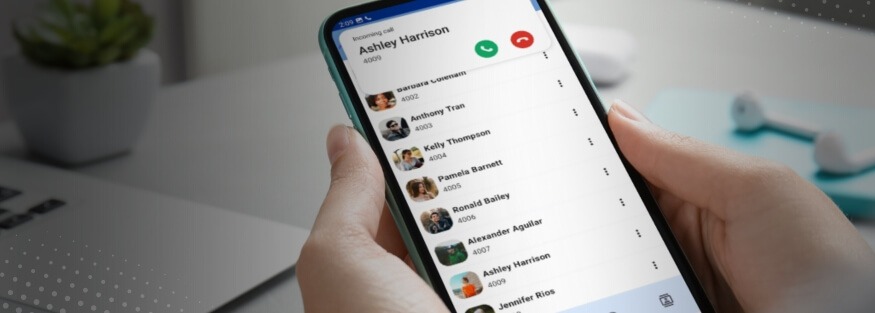
As of 2026, there are few businesses anywhere in the world that haven’t adopted a hybrid model, whether employees split their time between an office and a remote location or are entirely remote. These employees need to be connected to the company, and Vodia apps make this possible. We give companies of any size everything they need to manage communications in both hybrid and remote work environments. The Vodia PBX is OS agnostic, so you can use any OS – including Android, iOS, Linux, MAC and Windows – as your underlying platform. Our apps make it possible to:
access the office phone system address book
change settings such as call forwarding and business hours
chat with other team members users
hold, resume, and transfer calls
make and receive calls via the office phone system from a mobile device
use the office phone number from a mobile device
send and receive SMS messages via the office phone system
view availability and call status of colleagues
6. Separation of Business and Personal Calls
Regardless of how busy we are, we all need to disconnect once in a while (if not regularly). It’s not just a mental health issue - it’s also about your physical health, about sleep, relaxation, stress reduction…A business phone system with “working hours” provides you with a simple way to ensure high-quality CX while giving your employees some breathing room. The Vodia phone system enables your staff to set individual schedules for themselves - this includes call-forwarding to their mobile devices during business hours and after-hours call routing to call queues, other employees, or voicemail; features such as call routing by day of the week, DND, and presence makes it so your team members can manage their availability without missing important calls. With the Vodia PBX, you can handle peak-hour calling with call distribution or disconnect outside business hours. We can help you maintain uncompromising communications while helping your staff maintain work-life balance.
+1. White-Glove Support
By combining flexible PBX features with accessible AI tools, Vodia enables a smarter, more agile approach to business telephony that improves both internal efficiency and the overall customer experience, and our approach to support dovetails with our commitment to innovation and to the success of our partners and users. We want the Vodia phone system to work for you, and our white-glove support is available to make sure your communications system is impeccable.
Whatever you’re doing, we can help you do it better. Get in touch with us to discuss even more features you need in 2026 to transform your business communications: email us at sales@vodia.com, or call +1 (617) 861-3490 (United States), +61 2 7201 0788 (APAC), or +49 30 555 78749 (Europe).
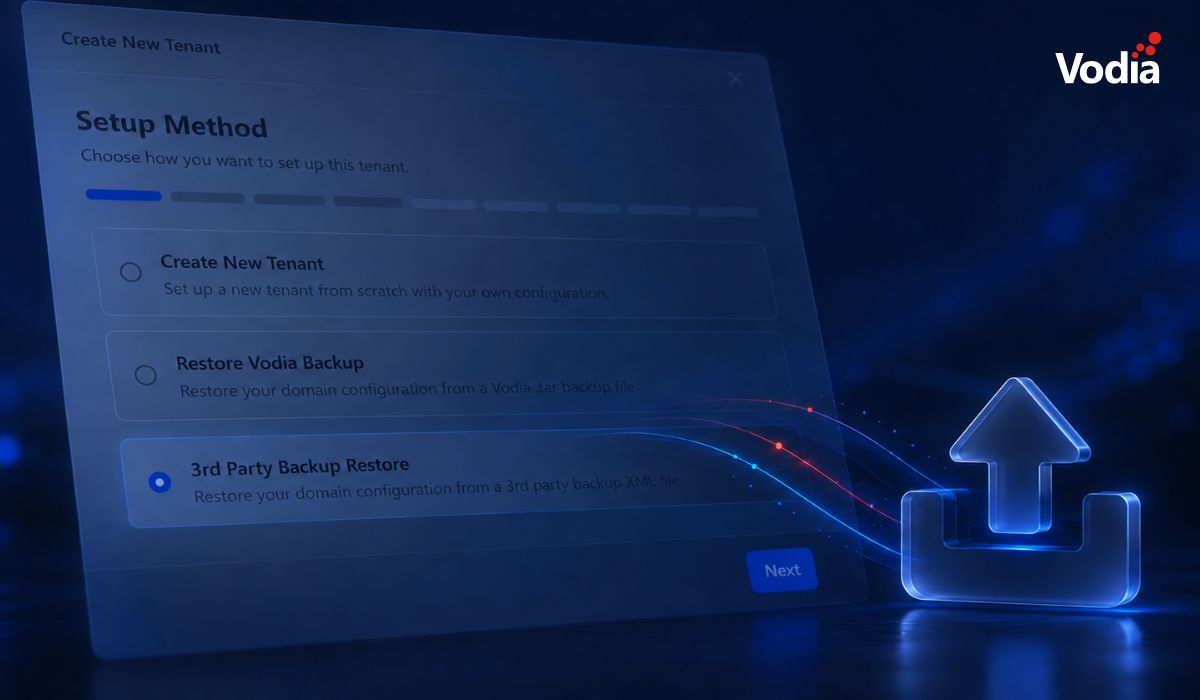
Switching phone systems doesn’t have to mean rebuilding everything from scratch. The Vodia PBX migration tool imports key configuration data from backups, including extensions, ring groups, queues, desk phones, and basic auto-attendant settings. Built into the Vodia Admin Portal, it guides administrators through the import process and reduces repetitive manual work, whether you’re moving 10 extensions or 1,000. Explore what transfers, what needs manual setup, and how the built-in tool reduces repetitive work when moving to Vodia.
Apps have changed how businesses communicate and work, but every digital experience still depends on physical hardware. From smartphones, desk phones, and headsets to networking equipment and cloud servers, reliable infrastructure supports productivity, security, and call quality. Here’s why hardware still matters in an app-first world and what businesses should consider when choosing dependable devices and secure connectivity for the office, hybrid teams, and remote work, while preparing for evolving technology.
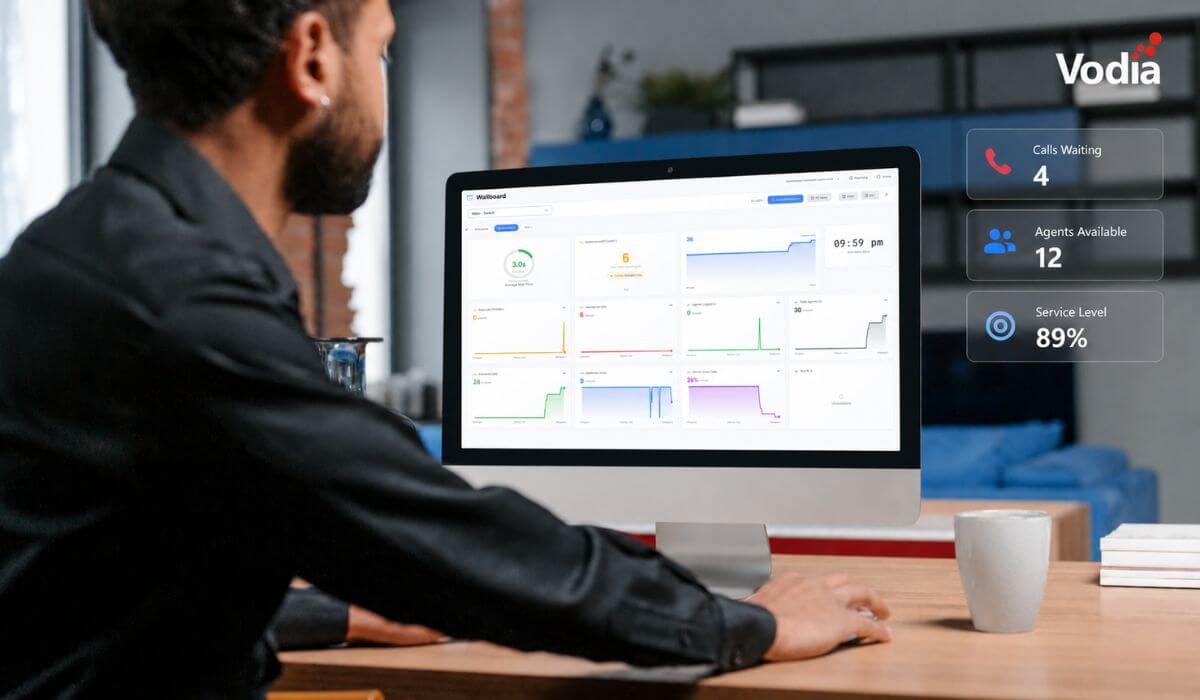
Vodia Wallboards gives supervisors, contact centers, service providers, and operations teams a self-hosted, real-time view of Vodia call queue activity. Monitor waiting, ringing, and active calls; agent availability; service levels; abandoned calls; and queue trends across one or more Vodia PBX systems. Start with a ready-made layout or build a custom wallboard using queue filters, live widgets, AI summaries, and alerts. Display the information your teams need in a browser, on an operations dashboard, or on a dedicated TV screen.
.svg)