Vodia Networks now integrates its powerful PBX system with Odoo Cloud, one of the world’s leading open-source platforms serving over 13 million users globally. This integration enables automatic contact creation, detailed call logging, and seamless updates to CRM leads and helpdesk tickets, improving communication workflows for businesses of all sizes. Combining Vodia’s scalable, feature-rich telephony with Odoo’s comprehensive suite of business applications, the partnership offers a robust, flexible solution designed to enhance productivity and streamline operations for enterprises, contact centers, and service providers worldwide.
Vodia is pleased to announce the Vodia PBX now integrates with Odoo Cloud. Odoo is one of the world’s leading open-source platforms serving over 13 million users worldwide from startups to enterprises.
Odoo: A Global Open Source ERP and CRM
Based in Belgium, Odoo’s vision is to “transform companies, empower employees.” The company gives businesses easy access to a suite of simple-to-use business applications, a complete set of tools for any business need. The company has developed 50 key, regularly updated applications, with 1,500 active members who have contributed more than 50K apps to Odoo’s ever-expanding solutions toolkit. Odoo comprises a community of 100,000 developers worldwide, all devoted to open source software.
The platform is available in two editions: Community (open source, 100 percent free) and Enterprise (extra apps, infrastructure, professional services). There’s no proprietary format, only PostgreSQL, so customers own their data. And there’s no software lock-in, and source code, GitHub access, and the flexibility to host on Odoo’s infrastructure or on-prem.
Connecting the Vodia PBX with Odoo
This integration connects Vodia PBX with Odoo CRM using XML-RPC protocol, allowing call data to be automatically logged in Odoo. It creates and updates contacts, logs calls as messages, and associates’ call information with existing CRM leads and helpdesk tickets.
The integration of the Vodia PBX with the Odoo platform combines all of the robust features of our PBX with Odoo’s unmatched suite of business applications:
Automatic contact creation and matching
Call logging in contact records
Call outcome and duration tracking
Integration with CRM leads and opportunities
Integration with helpdesk tickets
Support for outbound, inbound, and voicemail calls
To find out more about integrating our industry-standard phone system with Odoo, please visit our documentation page.
Vodia Networks, Inc. provides B2B cloud communications solutions for enterprises, contact centers, and service providers. Its PBX software offers a broad range of business telephony features for on-premise and cloud deployments on Windows, Linux, and Mac. Fully SIP-compliant, Vodia integrates with numerous SIP devices and trunking providers for flexible telephony. Its multi-tenant platforms support desk phones, softphones, APIs, and third-party CRM integrations. Vodia empowers partners and users with world-class cloud PBX and personalized support to ensure success. The company operates globally, with offices in Boston, USA, and Berlin, Germany. Visit Vodia on LinkedIn, X, and YouTube.
Following a critical PHP security advisory affecting installations worldwide, we temporarily restricted public access to some of our backend services while carrying out necessary upgrades. Access has now been restored, and the affected services are operating normally. The Vodia PBX itself does not use PHP and was not directly affected. We explain what happened, the changes to legacy licensing and TLS support, and why customers running older PBX versions should contact us for upgrade guidance.
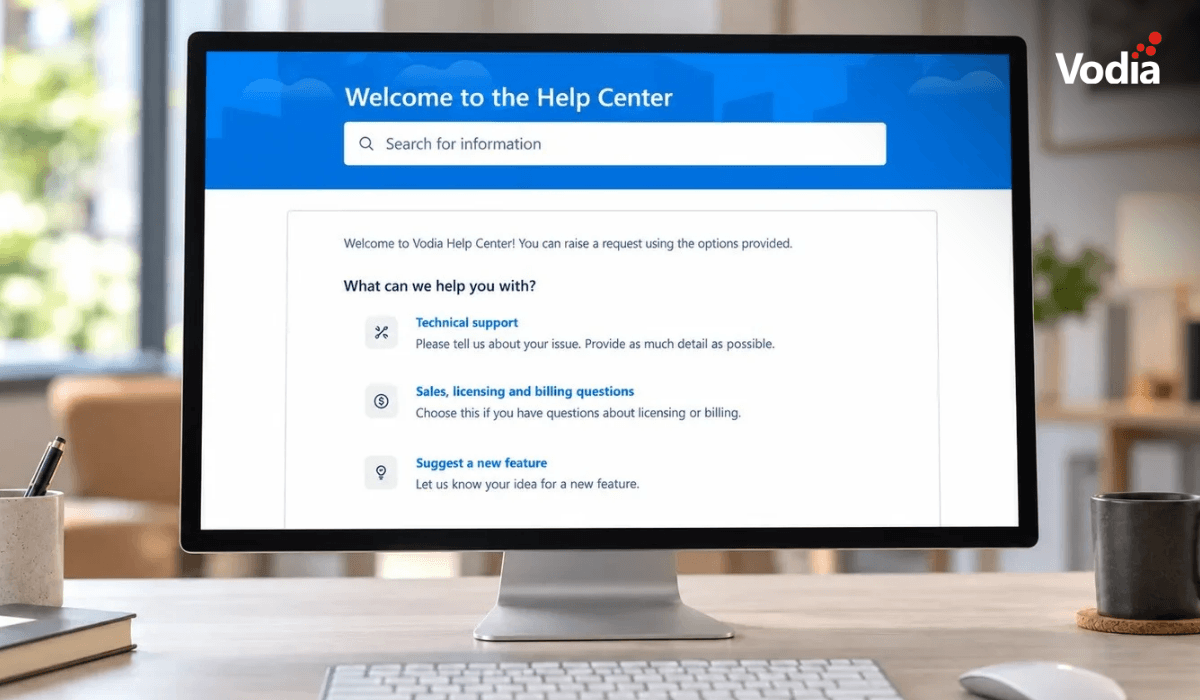
Submitting a support ticket with the right information helps our team understand your issue and reduces follow-up questions. This step-by-step guide walks you through the Vodia Help Center, from describing the problem and attaching diagnostic files to setting the business impact and providing your PBX details. You’ll also learn which call details and timestamps to include, alongside practical tips to keep troubleshooting focused and help our support team investigate your issue more efficiently.
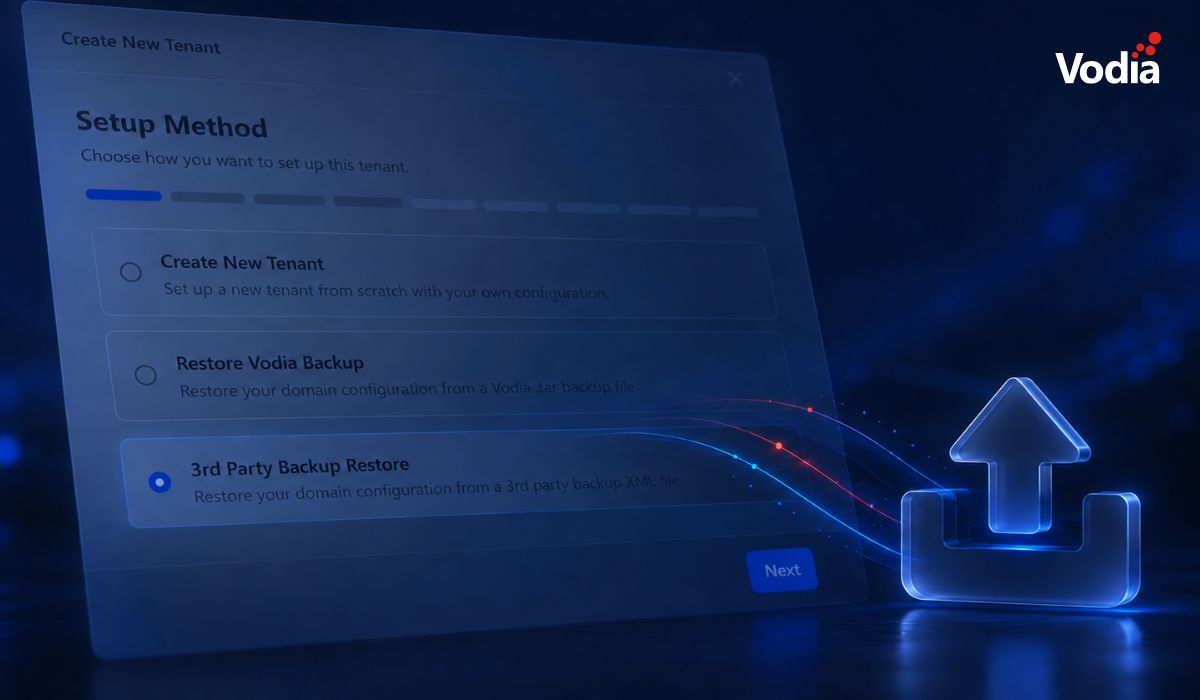
Switching phone systems doesn’t have to mean rebuilding everything from scratch. The Vodia PBX migration tool imports key configuration data from backups, including extensions, ring groups, queues, desk phones, and basic auto-attendant settings. Built into the Vodia Admin Portal, it guides administrators through the import process and reduces repetitive manual work, whether you’re moving 10 extensions or 1,000. Explore what transfers, what needs manual setup, and how the built-in tool reduces repetitive work when moving to Vodia.
.svg)