Whisper, OpenAI’s Automatic Speech Recognition system, delivers multilingual, noise-tolerant, and technical-language-ready transcription through a streamlined encoder-decoder architecture. With Vodia PBX’s integration, organizations can choose between using OpenAI’s service or hosting Whisper AI locally for complete data sovereignty and control. This on-premise option ensures that sensitive call data stays within your infrastructure while still benefiting from powerful transcription capabilities. To explore deployment options, see our Whisper AI on-premise setup documentation, review a self-hosted integration example, or follow our cloud-based call transcription guide.
Whisper is OpenAI’s Automatic Speech Recognition (ASR) system. The system has been trained on about 700,000 hours of supervised data, both multilingual and multitask, collected from the Internet. Thanks to this training, accomplished with a diverse and massive set of data, Whisper manages accents, background noise, and technical language with impressive ease. It also performs transcription in numerous languages and translates these languages into American English.
Implemented as an encoder-decoder transformer, Whisper’s architecture is an uncomplicated, end-to-end approach: it breaks input audio into 30-second pieces, which are converted into a log-Mel spectrum and sent through an encoder; the decoder is trained to anticipate the proper text caption, combined with special tokens that direct the single model to undertake language identification, multilingual speech transcription, phrase-level timestamps, and speech translation to-English.
In November of last year we announced a beta version of the Vodia PBX that connects the telephone system to the beta version of the OpenAI realtime API. If your organization prioritizes data sovereignty and on-premises processing, Vodia also supports the deployment of Whisper AI within your dedicated infrastructure. This enables you to maintain full control over your transcription processes, ensuring sensitive call data remains securely within your network boundaries.
To view the transcribed content, simply log in to your user portal, navigate to the 'History' section, select the desired call, then examine the 'call content' area.
To ensure optimal performance when running Whisper AI on your own hardware, refer to the official hardware requirements outlined in the OpenAI Whisper GitHub repository.
Now that we’re supporting real-time AI API integration with OpenAI, we’re also looking at integrating with more AI providers, so we can provide seamless AI integration within workflows. We’d love to tell you all about it - reach out to us at sales@vodia.com or call +1 (617) 861-3490 (United States), +61 2 7201 0788 (APAC), or +49 30 555 78749 (Europe).
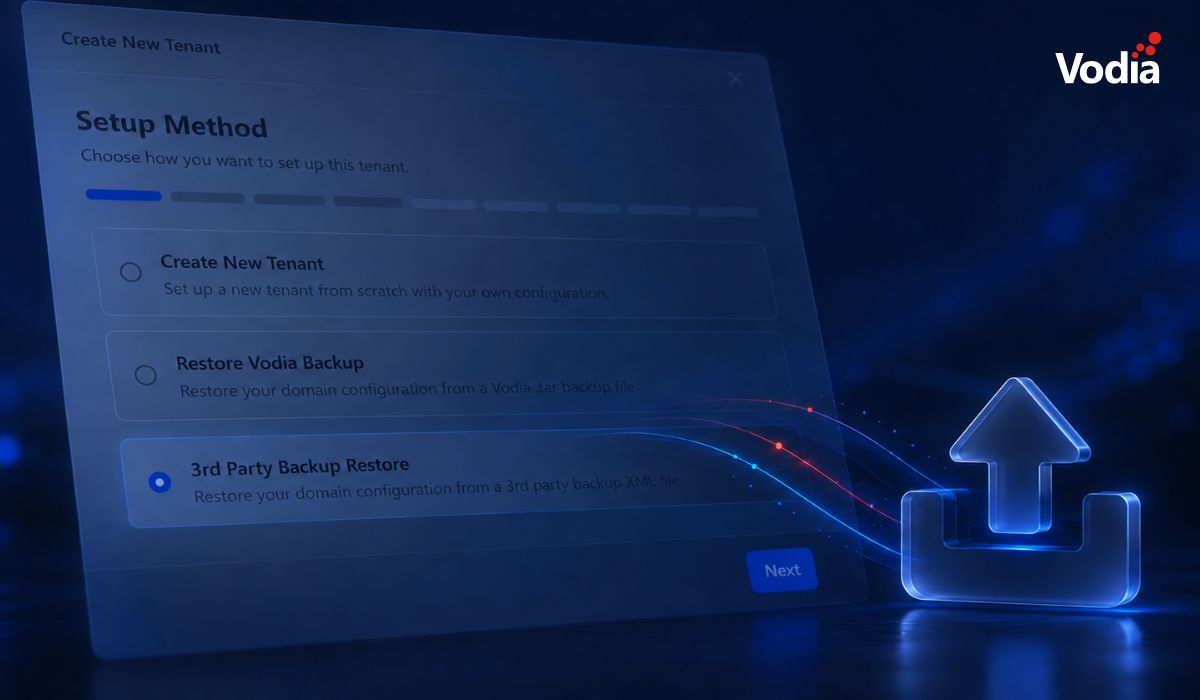
Switching phone systems doesn’t have to mean rebuilding everything from scratch. The Vodia PBX migration tool imports key configuration data from backups, including extensions, ring groups, queues, desk phones, and basic auto-attendant settings. Built into the Vodia Admin Portal, it guides administrators through the import process and reduces repetitive manual work, whether you’re moving 10 extensions or 1,000. Explore what transfers, what needs manual setup, and how the built-in tool reduces repetitive work when moving to Vodia.
Apps have changed how businesses communicate and work, but every digital experience still depends on physical hardware. From smartphones, desk phones, and headsets to networking equipment and cloud servers, reliable infrastructure supports productivity, security, and call quality. Here’s why hardware still matters in an app-first world and what businesses should consider when choosing dependable devices and secure connectivity for the office, hybrid teams, and remote work, while preparing for evolving technology.
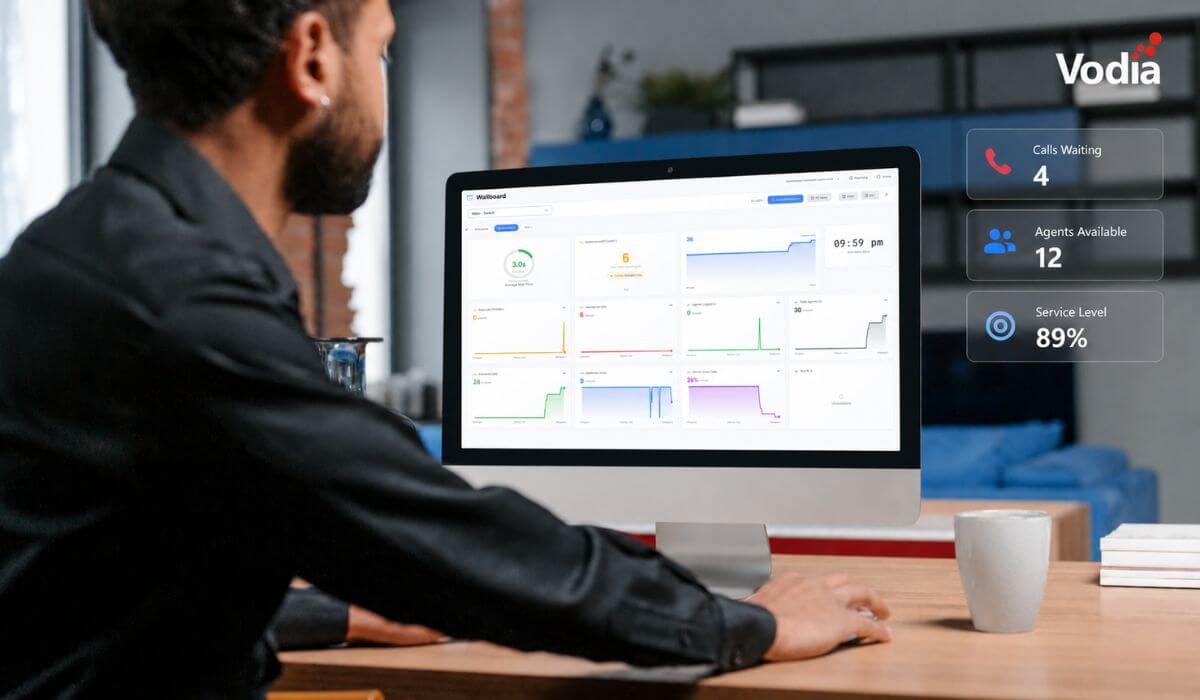
Vodia Wallboards gives supervisors, contact centers, service providers, and operations teams a self-hosted, real-time view of Vodia call queue activity. Monitor waiting, ringing, and active calls; agent availability; service levels; abandoned calls; and queue trends across one or more Vodia PBX systems. Start with a ready-made layout or build a custom wallboard using queue filters, live widgets, AI summaries, and alerts. Display the information your teams need in a browser, on an operations dashboard, or on a dedicated TV screen.
.svg)