I recently watched the July 30 podium discussion between Israeli history professor Yuval Harari, the bestselling author of Sapiens and a history professor at Hebrew University of Jerusalem, and Tom Parker of The Financial Times, “The Next 50 Years: Humanity, AI, Power.” Asked about the future of AI, Professor Harari’s response was quite intriguing: the most interesting period in human history, Harari told the audience, was the moment when people first began speaking to each other.
Keep talking
Stephen Hawking, the legendary astrophysicist and cosmologist, also saw this as perhaps the most crucial juncture in our history. In the early 90s, Professor Hawking recorded audio for a British Telecom commercial (later used by Pink Floyd in the song, “Keep Talking”): "For millions of years,” he said, “mankind lived just like the animals. Then something happened which unleashed the power of our imagination. We learned to talk..."
Since that moment, one lauded by both Professor Harari and Stephen Hawking, communication has evolved exponentially. In a very short span of time within the history of our planet, we have gone from words uttered over a fire or on a hunt to communication via audio, chat, shorts, and video; these means have superseded the books, letters, and telephone calls, which were the foundation of human communication for centuries.
Interpersonal communication
Beyond the technology of the pen and the printing press, beyond chat and email and video calls, the spoken word remains the fundamental means of communication. This is largely because we must speak to each other - as social animals, we are compelled to. Conversation, whether it’s between parents and children, friends, or students and teachers, will never change.
The other fundamental component of communication is the technology that enables communication between people over distance. We are a species on the move. Whereas maybe a few hundred years ago a person’s world was confined to a single village or city, today that world is, quite simply, the entire world. Even though, within a bandwidth context, it’s rather small, it requires a special kind of data stream - one that’s authentic and in real time. One that truly connects us.
Artificial General Intelligence (AGI)
AGI describes an AI system with a “human-level” capacity for learning, reasoning, and the application of knowledge across a spectrum of domains and tasks. AGI might take on and succeed in novel, multi-component situations, rather than just managing a single task, as “baseline” AI does now.
Given our communication needs, it’s quite useful for AGI to learn about the world. Compared to many other training data sources, listening to human conversations provides AGI with excellent training data. After all, true AGI needs to absorb as much information as it can about the real world, and voice communication is a crucial source of data. This is how it can acquire true human intelligence.
Call centers and data privacy
It’s our job to build and deploy the technology that will make this possible - this includes enabling powerful control of privacy. In a call center environment, where callers are well aware their calls are being recorded and used for AI training purposes, a recorded telephone conversation provides great value. In other situations, strong encryption and the legal requirement that calls must not be recorded are in place. Still, there are plenty of conversations available for AGI to use as data.
The expedition won’t be boring - not even close. Post-quantum encryption and AI integrations are on top of the latest phone system feature list.
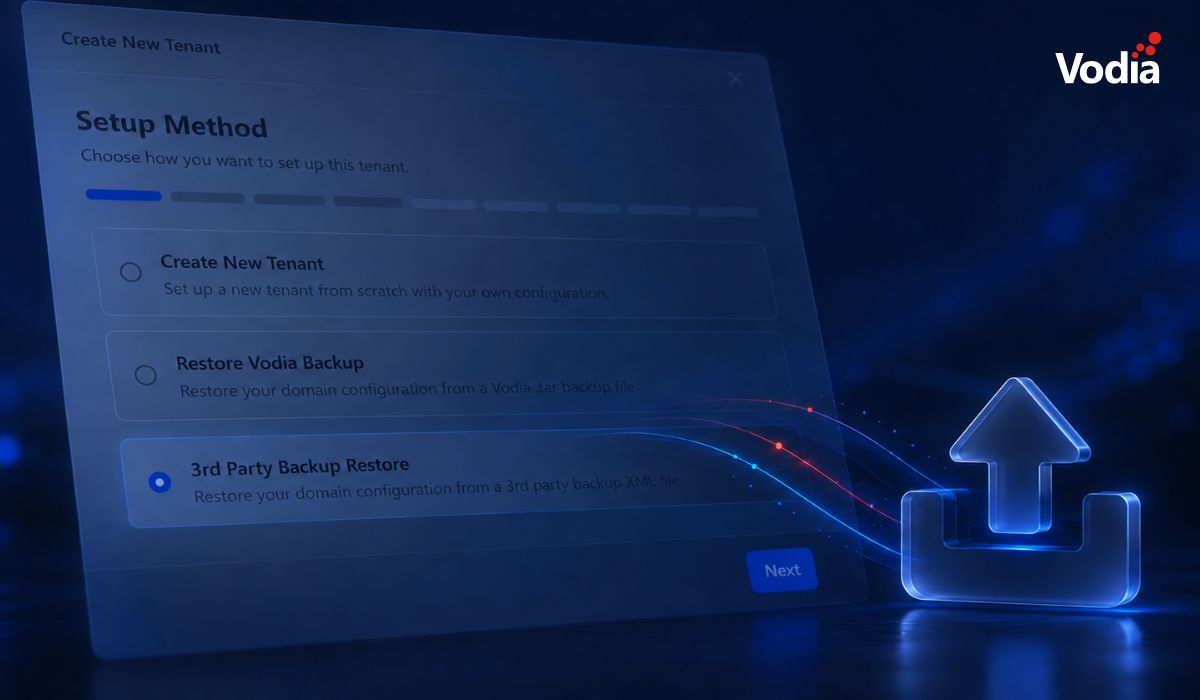
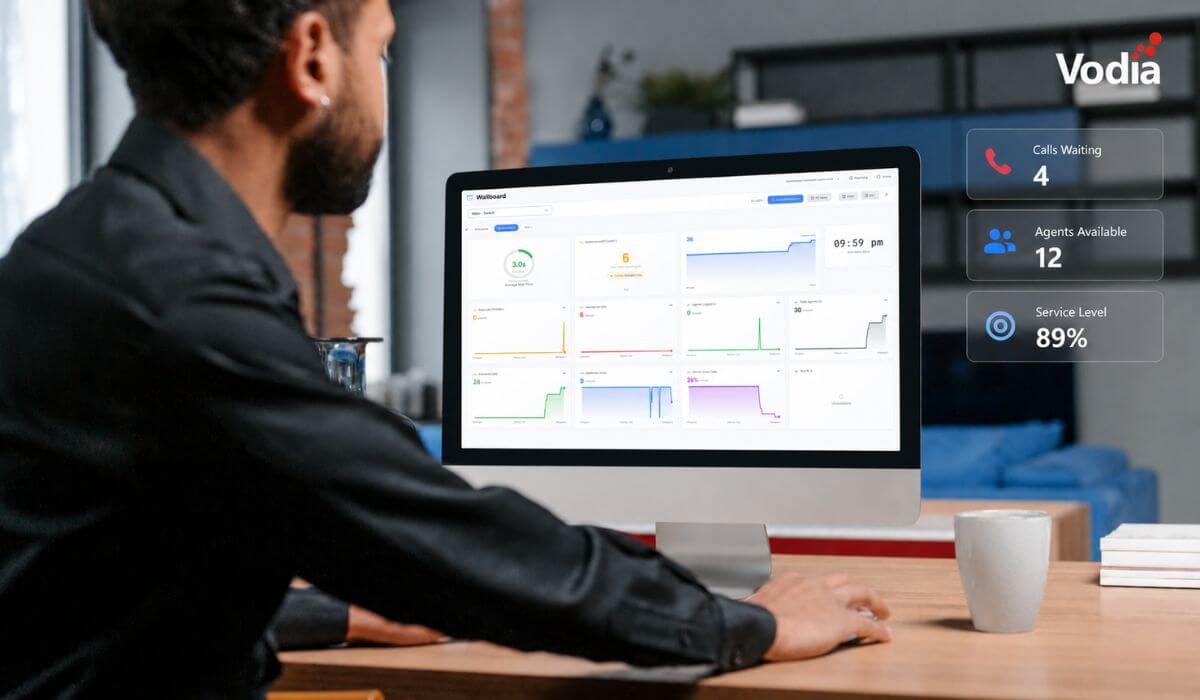
Here at Vodia, we continue to integrate AI functionality into our phone system. Our Voice Agents are AI-powered call handlers that replace traditional IVRs and receptionist logic while following existing PBX call flows; instead of forcing people through menus or scripted options, they adapt to how callers speak, making every interaction faster, clearer, and more human. And the newest version of our industry-standard cloud phone system, V70.4, introduces a redesigned help experience with an AI assistant built into the Admin Portal: the assistant uses the administrator’s selected AI provider, such as Anthropic Claude, OpenAI GPT, Google Gemini, or a custom endpoint, providing page context, so the AI can deliver relevant help.
We continue to find new ways to build AI features into our PBX to take voice communication into the future. I’d love to hear what you think about what AI will bring to business communication. Reach out to me on LinkedIn.
Let’s unleash the power of our imagination. Let’s keep talking.
.svg)