The US Chamber of Commerce is encouraging small and midsize businesses to adopt VoIP systems for better efficiency, lower costs, and improved accessibility. VoIP enables communication over the internet instead of traditional phone lines, giving SMBs access to advanced tools like call analytics, automation, and AI. With integrations across CRMs and business apps, VoIP enhances customer experience and productivity while remaining scalable and cost-effective. Vodia Networks builds on this foundation, offering a secure, feature-rich PBX.
The US Chamber of Commerce, the world’s largest business organization, recommends Voice over Internet Protocol (VoIP) for SMBs. This past summer, the Chamber published an article listing the benefits of VoIP, including lower costs, operational efficiency, and accessibility.
According to the Chamber, “Many VoIP phone providers have invested in analytics, automation, and AI tools. These capabilities help leaders solve problems and get more value for their money. Moreover, sophisticated VoIP solutions automate workflows and analyze data across platforms, allowing organizations to coordinate activities involving help desk or CRM tools.”
What Is VoIP?
VoIP enables the transmission of voice via the internet, rather than over traditional, “copper” landlines. VoIP converts voice into packets of digital data so phone calls can be made using broadband connections. It has become a foundation for modern business communication.
VoIP can be used for both business and residential systems; users can communicate via voice from any connected device, including computers, smartphones, and tablets.
Why Should SMBs Deploy VoIP Systems?
According to the US Chamber of Commerce, SMBs choosing to deploy VoIP communication systems bring significant, accretive benefits to their companies, including:
Contact Center Functionality: VoIP gives SMBs call center functionality, including key features such as:
Mobile apps: With a VoIP system, an SMB’s employees can use whatever apps they wish and whatever devices they want - particularly helpful when your company has a bring-your-own-device (BYOD) policy - to make and receive business calls from anywhere, anytime.
Productivity: VoIP systems, particularly those that integrate with AI platforms, provide SMBs with call center features, including video conferencing and task management tools, while AI transcribes calls and automates routine operational tasks. This frees up employees to take on more important projects and interact with customers.
Scalability: With a VoIP phone system, an SMB can add or remove users - thanks to per seat licensing - from an online administrative portal.
Why Vodia Is the Best Solution for SMBs
Vodia Networks, Inc. leverages VoIP technology to deliver a comprehensive, secure phone system that supports high-quality voice calls, scalability, and integration with multiple communication channels.
The Vodia phone system can be deployed quickly, without any disruption of business operations. It’s easy to use, thanks to its intuitive interfaces, and it works with your existing hardware. We also give you white-glove support and integrations with the world’s best devices and business software platforms.
The Vodia PBX is simply the ultimate cloud phone system. The US Chamber of Commerce reports more than 30 percent of US SMBs are using VoIP phone systems. If your company is one of the more than 60 percent of US SMBs not using a VoIP phone system, please get in touch with us, sales@vodia.com, +1 (617) 861-3490.
Following a critical PHP security advisory affecting installations worldwide, we temporarily restricted public access to some of our backend services while carrying out necessary upgrades. Access has now been restored, and the affected services are operating normally. The Vodia PBX itself does not use PHP and was not directly affected. We explain what happened, the changes to legacy licensing and TLS support, and why customers running older PBX versions should contact us for upgrade guidance.
Submitting a support ticket with the right information helps our team understand your issue and reduces follow-up questions. This step-by-step guide walks you through the Vodia Help Center, from describing the problem and attaching diagnostic files to setting the business impact and providing your PBX details. You’ll also learn which call details and timestamps to include, alongside practical tips to keep troubleshooting focused and help our support team investigate your issue more efficiently.
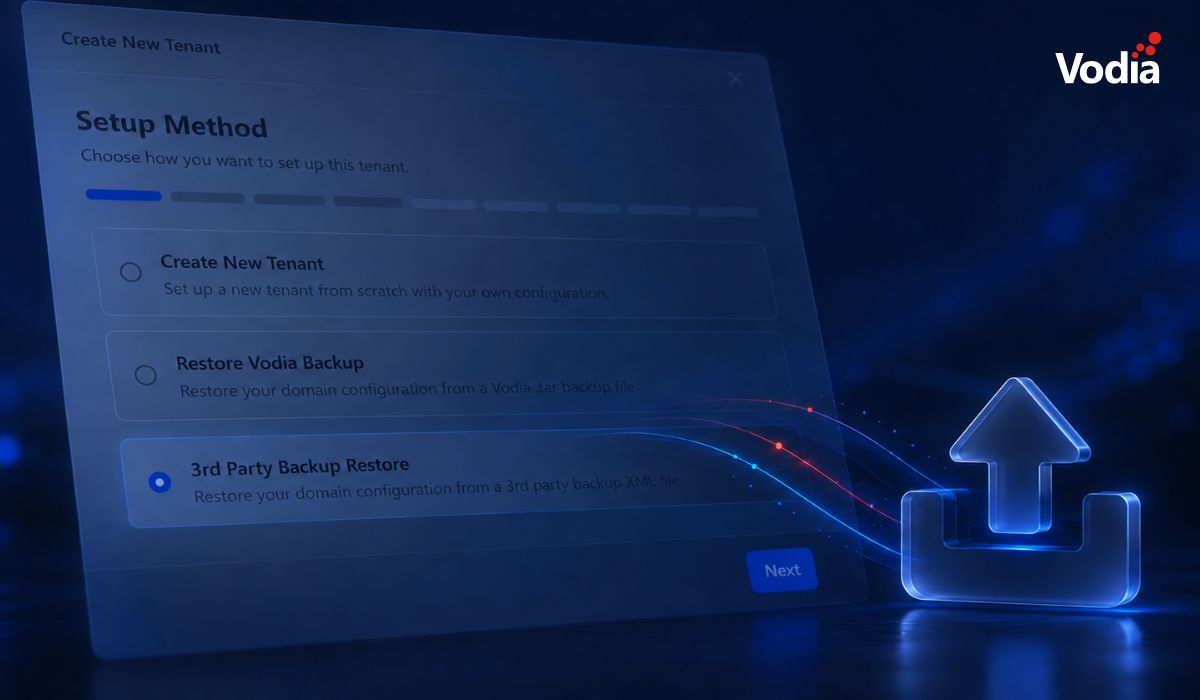
Switching phone systems doesn’t have to mean rebuilding everything from scratch. The Vodia PBX migration tool imports key configuration data from backups, including extensions, ring groups, queues, desk phones, and basic auto-attendant settings. Built into the Vodia Admin Portal, it guides administrators through the import process and reduces repetitive manual work, whether you’re moving 10 extensions or 1,000. Explore what transfers, what needs manual setup, and how the built-in tool reduces repetitive work when moving to Vodia.
.svg)