Vodia Now Integrates with Microsoft Teams Presence
Published on:
August 25, 2025
Vodia PBX now supports Microsoft Teams Presence, building on its Teams Direct Routing certification and Dynamics 365 integration. Using Graph API from version 69.5.13, a user’s Vodia extension is automatically set to Do Not Disturb when they are on a Teams call. Presence status such as Available, Away, Busy, In a Meeting, or Presenting is matched via the Teams user’s principal username or email, allowing VoIP phones and web portals to show real-time status across devices. This integration connects Teams with a full-featured SIP-compliant PBX, enabling organizations to unify communications, streamline workflows, and support both cloud and on-premise telephony solutions.
Following our Teams certification and the recent announcement of our integration with Microsoft Dynamics 365, we are pleased to announce the integration of the Vodia phone system with Microsoft Teams Presence, the next step in our ongoing support for Microsoft platforms.
Microsoft Teams Presence
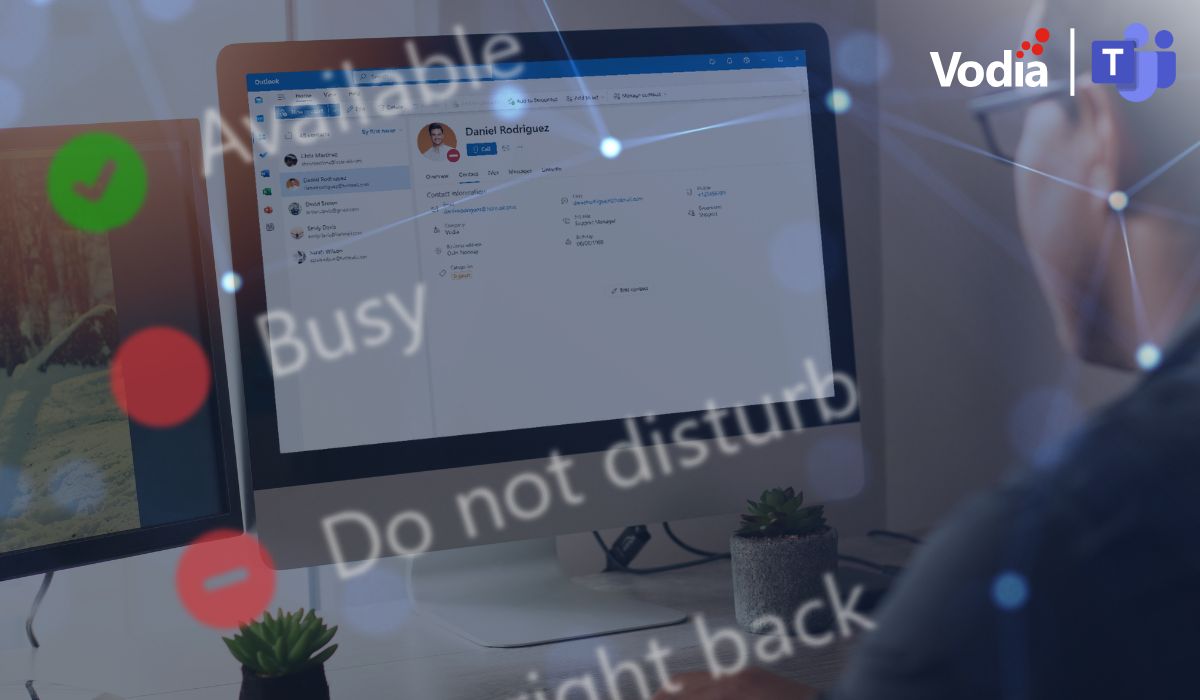
Within Teams and throughout Microsoft 365, Presence is a core component of each user’s profile. Presence indicates the current availability of the user and indicates the user’s status to other Teams users, enabling all users to see each other’s status in “nearly” real time. User status is based on activity, which is available to other Teams users and on Outlook calendars:
Available
Away
Be right back
Busy
Do not disturb
In a call
In a meeting
Offline
Presenting
The Vodia Integration with Microsoft Teams Presence
Vodia now supports integration with Microsoft Teams presence using Graph API (from version 69.5.13). When a Teams user is on a call, the extension is automatically set to DND. The Teams user’s principal username or email address is used to match against the extension's email address - this allows VoIP phones (using BLF) or a web portal to monitor the status of Teams extensions, as they will show as DND (the extension email address must match the principal username in Microsoft Teams/Office 365).
Vodia Networks, Inc. provides B2B cloud communications solutions for enterprises, contact centers, and service providers. Its PBX software offers a broad range of business telephony features for on-premise and cloud deployments on Windows, Linux, and Mac. Fully SIP-compliant, Vodia integrates with numerous SIP devices and trunking providers for flexible telephony. Its multi-tenant platforms support desk phones, softphones, APIs, and third-party CRM integrations. Vodia empowers partners and users with world-class cloud PBX and personalized support to ensure success. The company has headquarters in Boston, USA, and Berlin, Germany. Visit Vodia on LinkedIn, X, and YouTube.
Following a critical PHP security advisory affecting installations worldwide, we temporarily restricted public access to some of our backend services while carrying out necessary upgrades. Access has now been restored, and the affected services are operating normally. The Vodia PBX itself does not use PHP and was not directly affected. We explain what happened, the changes to legacy licensing and TLS support, and why customers running older PBX versions should contact us for upgrade guidance.
Submitting a support ticket with the right information helps our team understand your issue and reduces follow-up questions. This step-by-step guide walks you through the Vodia Help Center, from describing the problem and attaching diagnostic files to setting the business impact and providing your PBX details. You’ll also learn which call details and timestamps to include, alongside practical tips to keep troubleshooting focused and help our support team investigate your issue more efficiently.
Switching phone systems doesn’t have to mean rebuilding everything from scratch. The Vodia PBX migration tool imports key configuration data from backups, including extensions, ring groups, queues, desk phones, and basic auto-attendant settings. Built into the Vodia Admin Portal, it guides administrators through the import process and reduces repetitive manual work, whether you’re moving 10 extensions or 1,000. Explore what transfers, what needs manual setup, and how the built-in tool reduces repetitive work when moving to Vodia.
.svg)