Vodia PBX V70: New Admin Interface, AI Voice Agents, and Scalable Multi-Tenant Performance
Published on:
March 19, 2026
Vodia PBX V70 introduces a redesigned admin interface, multi-core scalability supporting more than a thousand concurrent calls per server, and integrated AI voice agents for both inbound and outbound communication. Reusable AI templates make automation easier to deploy, while snapshots and centralized provisioning reduce operational risk. With custom dashboards, emergency alerts, and WhatsApp Business integration, V70 provides greater control and flexibility for real-world deployments.
Vodia Networks is pleased to announce the official release of Vodia PBX V70, the next major version of our cloud phone system.
V70 has been engineered for operational scale, administrative clarity, and production readiness; it builds on the stability of previous releases while introducing architectural and usability improvements designed for real-world, multi-tenant deployments.
A new administrator web interface
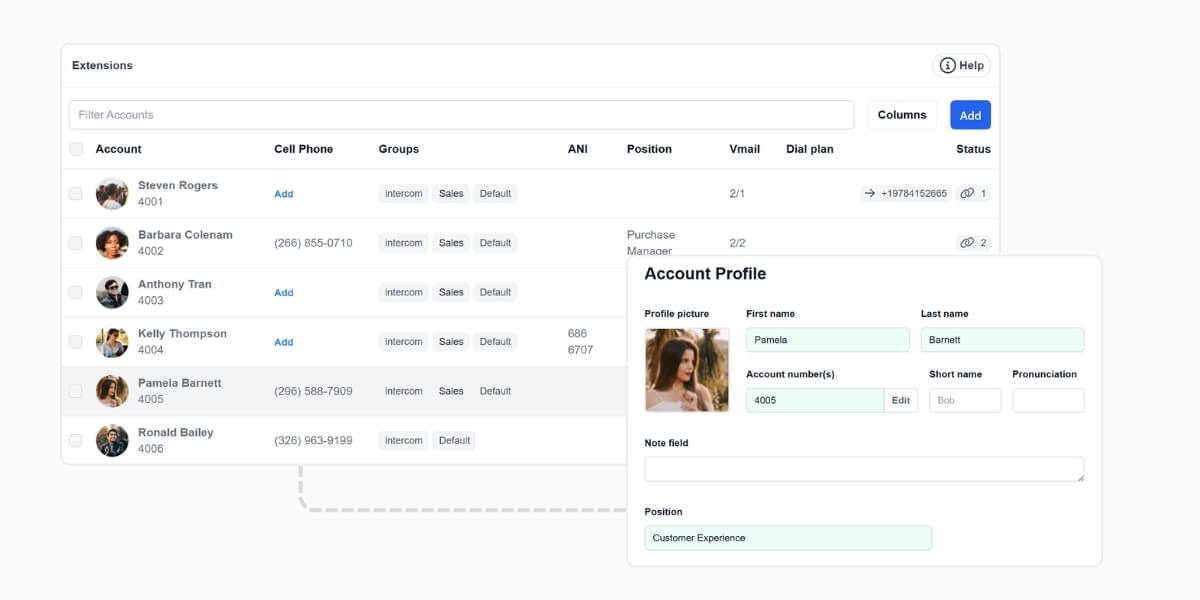
The most visible change in V70 is the redesigned administrator web interface. The new interface has been designed for efficiency and speed. Whether managing a single system or hundreds of tenants, V70 delivers faster navigation, smarter workflows, and powerful new capabilities to make administration more intuitive. Administrators accustomed to earlier versions will find existing concepts and workflows are preserved, while common tasks are easier to complete at scale.
Scalability and platform improvements
V70 introduces several long-requested enhancements to improve scalability, flexibility, and operational safety.
Higher call capacity per server: With V70, it’s now possible to manage more than a thousand calls on a single server, thanks to multiple cores for media processing. This makes the multi-tenancy feature even more flexible and robust for partners managing large customer bases.
Cross-tenant presence and BLF sharing: BLF status can now be shared between tenants, supporting branch office scenarios and enabling presence information to be sourced from external applications using the REST API.
Snapshots for safer operations: Administrators can now create and restore system snapshots, reducing risk during upgrades, changes, and maintenance.
Centralized remote provisioning: Remote provisioning is now fully integrated into V70, streamlining the process for new system and tenant installations, and enabling faster and more consistent deployments.
AI, automation, and real-time visibility
V70 introduces integrated AI capabilities and real-time monitoring tools to improve operational control.
V70 features fully-automated outbound AI Voice Agents for automated customer outreach, powered by OpenAI's Realtime API. The same framework can handle both inbound and outbound calls, creating consistent conversational experiences.
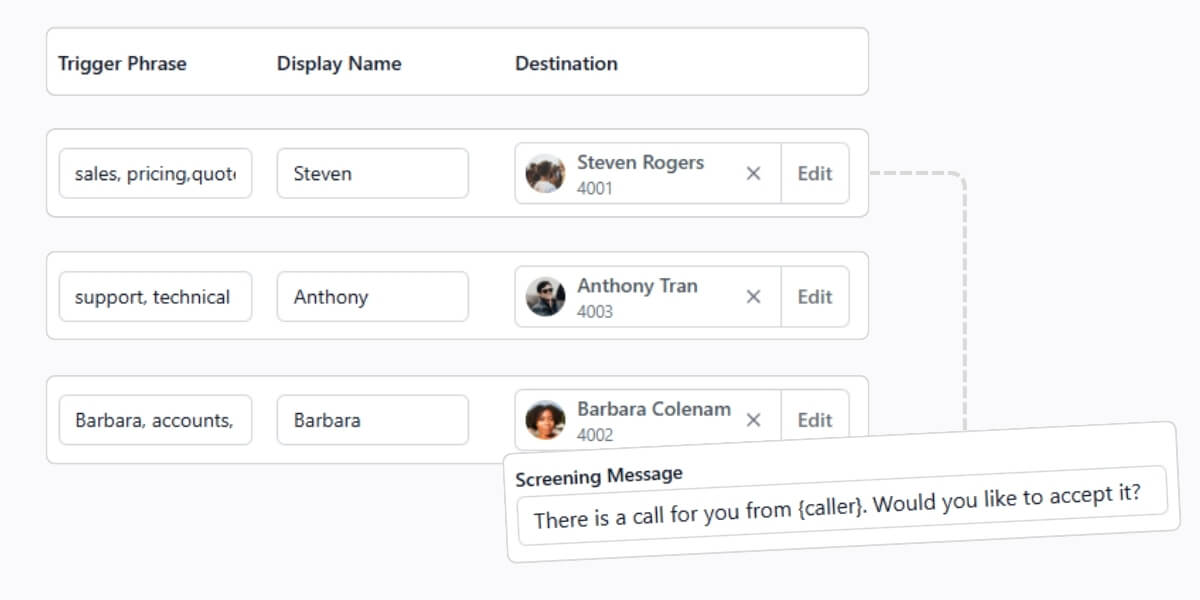
Building on this architecture, V70 also introduces reusable AI templates for common PBX functions such as AI assistant and attended transfer handling. These templates provide predefined, structured configurations that help administrators deploy AI features consistently and efficiently across systems and tenants while maintaining predictable, production-ready behavior.
V70 also introduces a powerful custom dashboard framework, allowing administrators complete control to build and tailor dashboards based on their specific monitoring needs, eliminating the need for third-party tools.
Emergency alerts, scheduling, and control
V70 expands how systems respond to events and operational conditions.
With V70, administrators can configure emergency and notification alerts triggered by users. Once activated, alerts can send notifications via multiple channels - desktop phones, email, mobile apps, SMS - and automatically initiate calls to designated numbers.
Service flags in V70 can now be configured with multiple events and integrated with external calendars such as Google Calendar. This allows more flexible scheduling and control based on real-world conditions.
Communication and integrations
V70 extends communication capabilities across platforms and systems.
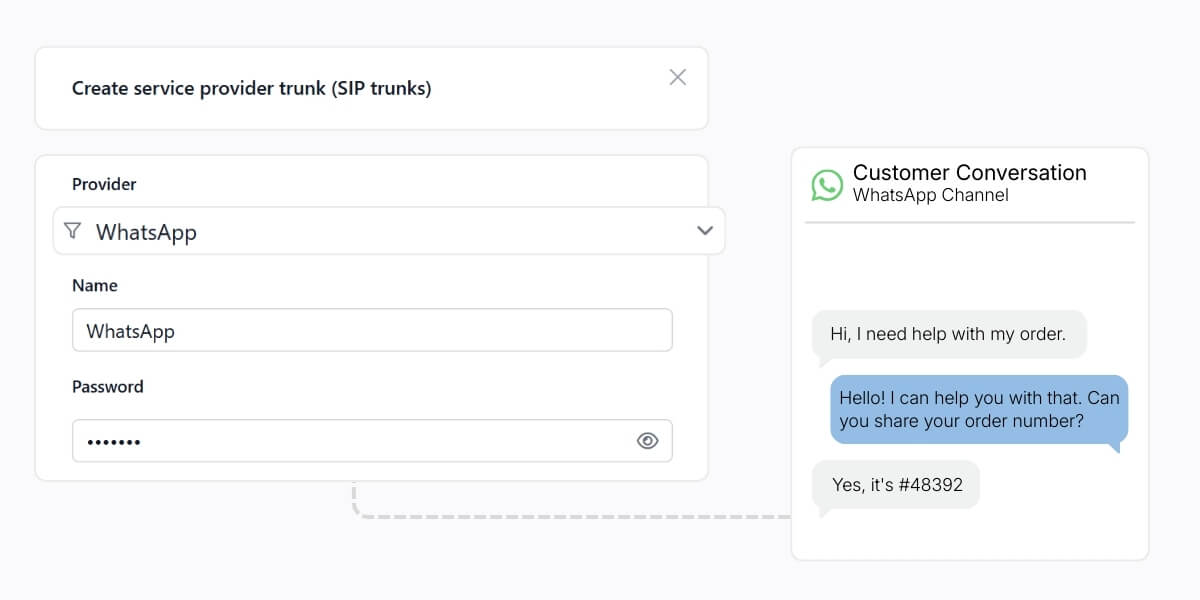
WhatsApp Business Messaging: V70 enables direct SIP integration with the WhatsApp Business Calling API, allowing WhatsApp users to call your business number and have those calls routed directly into the PBX, without any middleware or gateway. Messaging capabilities with the WhatsApp Business Platform are also included to support incoming and outgoing text and image messages.
External Presence Sharing: External presence information between two tenants on the same PBX, or across different PBX servers in separate locations, can now be shared (the PBX systems must be able to reach each other via the internet). Once configured, the external account can be monitored through multiple interfaces.
Skills-Based Routing: Organizations can assign skills to numbers, enabling incoming calls to be routed to agents based on expertise, language, or role.
Supported operating systems and platforms
We’ve made significant upgrades to our supported operating systems:
Ubuntu 24 and above
Debian 12 and above
CentOS Stream 10 and above
AlmaLinux 10 and above
Rocky Linux 10 and above
Amazon Linux 2023 (AL2023)
V70 now supports the AArch64 (ARM64) architecture, enabling you to run your PBX software on cost-effective AWS Graviton processors. This allows for significant price-performance benefits
Documentation and upcoming deep dives
Detailed release notes for V70 are available for further information. Following the official release of V70, we’ll take a deep dive into some of V70’s most exciting features.
Continued support for V69
The current 69.5 build is quite robust, and we’ll make sure it stays that way. Many of our customers are running older versions of our PBX: while we’re champing at the bit to see current and new customers deploy V70, we’re perfectly happy to continue offering V69 for new installations.
Feedback and next steps
Our goal with V70 is to provide a platform that can be deployed confidently in real-world environments, supporting scalable B2B communications and reliable operations.
We welcome feedback from partners and customers deploying V70. For comments and questions, please email us at v70feedback@vodia.com or call +1 (617) 861-3490.
About Vodia
Vodia Networks, Inc. provides B2B cloud communications solutions for enterprises, contact centers, and service providers. Its PBX software offers a broad range of business telephony features for on-premise and cloud deployments on Windows, Linux, and Mac. Fully SIP-compliant, Vodia integrates with numerous SIP devices and trunking providers for flexible telephony. Its multi-tenant platforms support desk phones, softphones, APIs, and third-party CRM integrations. Vodia empowers partners and users with world-class cloud PBX and personalized support to ensure success. The company operates globally, with offices in Boston, USA, and Berlin, Germany. Visit Vodia on LinkedIn, X, and YouTube.
Following a critical PHP security advisory affecting installations worldwide, we temporarily restricted public access to some of our backend services while carrying out necessary upgrades. Access has now been restored, and the affected services are operating normally. The Vodia PBX itself does not use PHP and was not directly affected. We explain what happened, the changes to legacy licensing and TLS support, and why customers running older PBX versions should contact us for upgrade guidance.
Submitting a support ticket with the right information helps our team understand your issue and reduces follow-up questions. This step-by-step guide walks you through the Vodia Help Center, from describing the problem and attaching diagnostic files to setting the business impact and providing your PBX details. You’ll also learn which call details and timestamps to include, alongside practical tips to keep troubleshooting focused and help our support team investigate your issue more efficiently.
Switching phone systems doesn’t have to mean rebuilding everything from scratch. The Vodia PBX migration tool imports key configuration data from backups, including extensions, ring groups, queues, desk phones, and basic auto-attendant settings. Built into the Vodia Admin Portal, it guides administrators through the import process and reduces repetitive manual work, whether you’re moving 10 extensions or 1,000. Explore what transfers, what needs manual setup, and how the built-in tool reduces repetitive work when moving to Vodia.
.svg)