Your legacy phone system might be serving your needs, at the moment, but it might be costing you money and it can’t grow with your business the way a cloud communication system can - and will.
At Vodia, our best-in-class, feature-rich cloud phone system has helped businesses worldwide improve their external and internal communications. The Vodia PBX supports enhanced collaboration amongst your team members, and it enables hybrid and remote work models for increased flexibility and productivity. And it can reduce your telephony expenses by more than 50 percent.
What Makes A Phone System Outdated?
Yes, there’s plenty to love about landlines and deskphones. We think of them as if they’re old pickup trucks - they take a beating, but they’ve always gotten the job done. But will they always? If you’re using a legacy phone system, you’re probably tied up with a lot of costly issues:
- aging hardware
- installation fees
- maintenance costs
- per-line fees
- repair fees
- slow response times
If your company operates from multiple locations, there are other complexities and costs:
- long-distance/multi-line pricing
- new wiring and hardware at new locations
Finally, legacy phone systems can be disrupted by outages caused by natural disasters (earthquakes and hurricanes) or other events, as well as the failure of outdated hardware. Even if a massive asteroid collides with Earth, your business can’t afford to miss calls or lose a connection.
What’s the Alternative to an “Old-Fashioned” Phone System?
Your best bet is to deploy a Voice-over-Internet-Protocol (VoIP) system that supports unified communications in the cloud. VoIP allows voice communication to be transmitted over the internet, rather than via traditional or legacy telephone lines. By converting voice signals into digital data packets, VoIP enables phone calls using broadband connections, offering cost savings and increased flexibility. VoIP supports advanced features like video calls, conference calls, and integration with other digital communication tools.
VoIP is a foundation for modern business telephony, allowing companies to scale communications, reduce infrastructure costs, and enhance mobility for remote workers - it supports unified communications by combining voice with messaging and collaboration platforms. VoIP enables hybrid and remote models, so any organization can benefit from a dispersed workforce, with individual employees using their own devices (BYOD) for external and internal communications. It is, quite simply, the present and the future of business telephony.
Why Vodia
Vodia leverages VoIP technology to deliver a comprehensive PBX solution that supports high-quality voice calls, scalability, and integration with multiple communication channels - our phone system is the industry standard. Since 2012, we’ve been building and relentlessly improving our PBX to give organizations of every size in just about every industry the most cost-effective, feature-rich, robust, scalable, secure communications platform to help them grow and thrive, and in 2026 we’ll release the most recent iteration of the Vodia phone system, version 70.
Integrations
Vodia is the perfect foundation for a communications ecosystem that grows with your company, one that supports Microsoft Teams and some of the industry’s best CRMs, including Freshdesk, Salesforce and Zoho, and that integrates with the world’s best phones.
What about Deployment and Support?
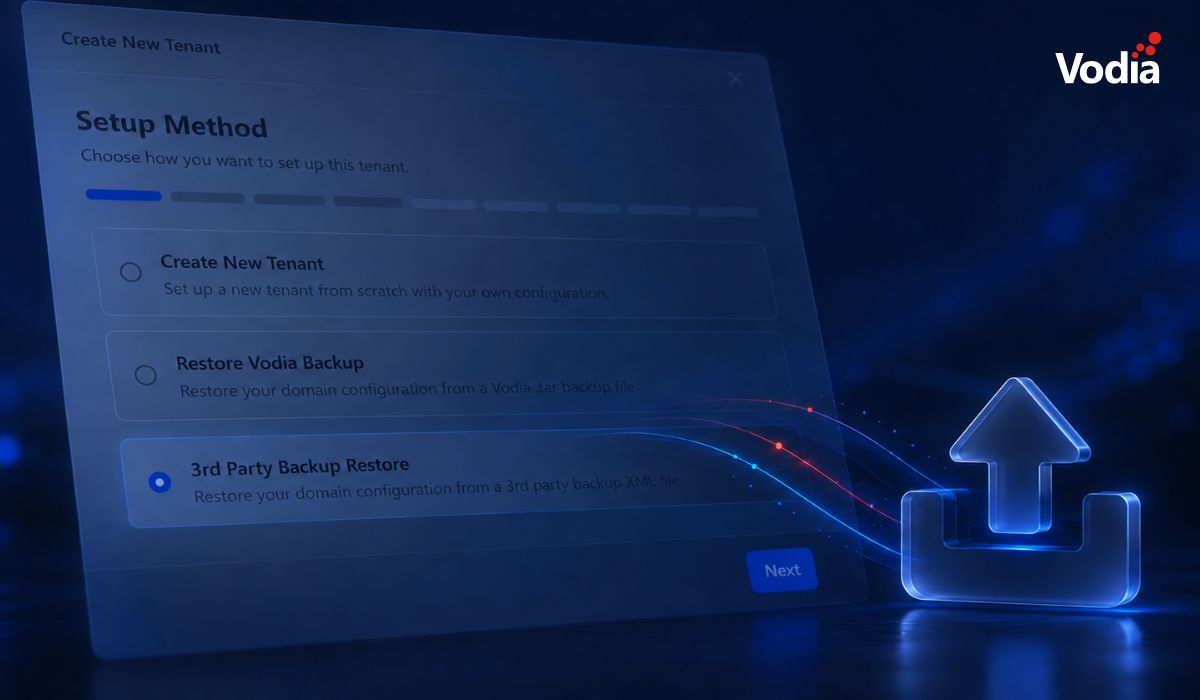
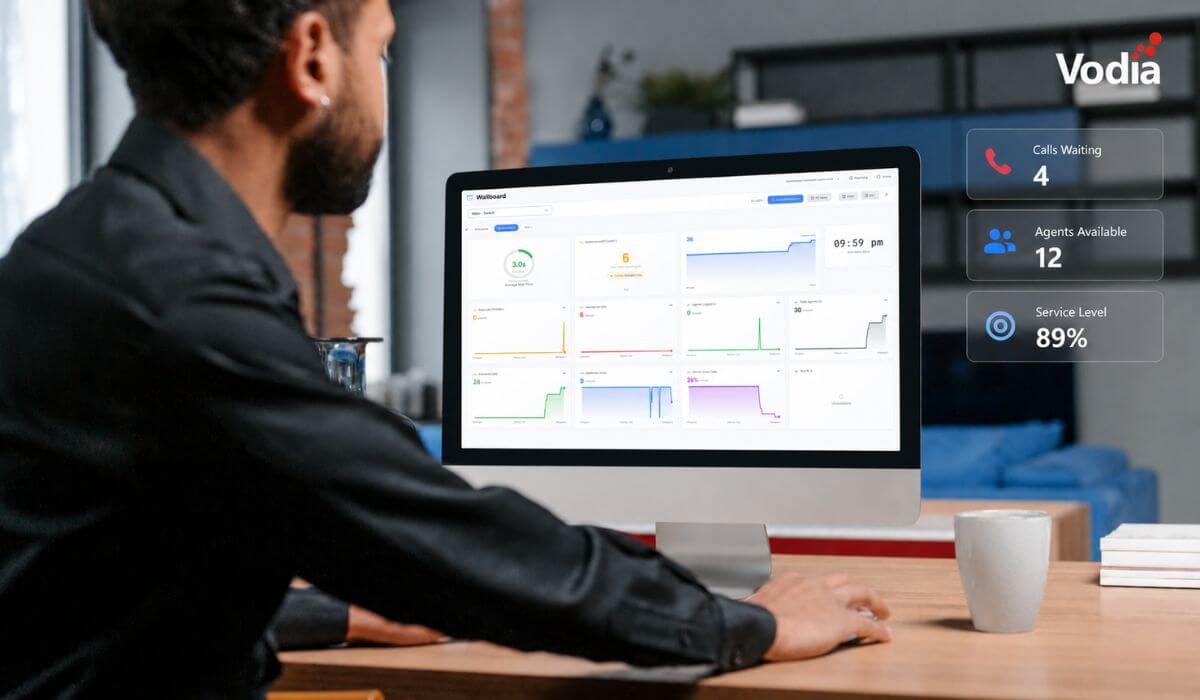
Installation is fast and won’t disrupt your operations, and we give all of our customers the kind of old-school white glove service that defines our relationship-first approach. The Vodia phone system is easy to use, with intuitive dashboards and interfaces, so your staff can get up to speed fast - and stay there.
Thinking about a digital transformation? We can take your communications to the cloud. And we’ll let you keep one or two of your old phones as souvenirs. Get in touch with us: contact us at sales@vodia.com, or call +1 (617) 861-3490 (United States), +61 2 7201 0788 (APAC), or +49 30 555 78749 (Europe).
.svg)