MS Teams Integration and the Benefits of Microsoft Certification for Communications
Published on:
November 4, 2025
Microsoft Teams has become a cornerstone of modern business communication, empowering over 250 million users worldwide with tools for collaboration, automation, and productivity. Yet while Teams excels at internal communication, it lacks native support for traditional phone systems and analog devices. That’s where certified integrations like the Vodia PBX come in. As a Microsoft-certified solution, Vodia bridges Teams with SIP phones, VoIP devices, and analog endpoints, enabling businesses to make and receive external calls directly within Teams.
Microsoft Teams - A Global Communications Solution
The world changed on 14 March 2017 with the release of Microsoft Teams (“Teams”). Originally created to inspire and support collaboration amongst employees, Teams has evolved as an application for automation and business processes, increasing productivity and improving communication. For many organizations, Teams has become a foundational component of their everyday operations: it’s a powerful app for chat, file sharing, video conferencing, and voice, alongside many other features and integrations.
93 percent of Fortune 100 companies use Teams for internal and external communications.
32 percent of video conferences worldwide are via Teams
Teams was downloaded 78 million times during the first three quarters of 2024
8 million U.S. companies currently use Teams
These numbers are of course expected to grow, as more and more organizations worldwide choose to deploy Teams.
Teams Integrations
Beyond its core functionalities, Teams integrates with more than 600 (and counting) different programs - these programs often “supercharge” Teams, increasing and strengthening the program as a tool for improved collaboration and increased productivity and, ultimately, for the provision of the best possible customer service. Some of the hundreds of integrations include:
Adobe Creative Cloud
Hubspot
Jotform
Pipedrive
Salesforce
Shiji
Trello
Vodia
YouTube
Zammad
Zoho
The seamless integration of Teams with the world’s best business platforms/CRMs makes Teams exponentially more useful and more powerful. Which brings us to Microsoft Teams certification.
The Benefits of Microsoft Certification for Customers
Microsoft certifies its software partners - these partners must earn this certification by meeting specific requirements such as interoperability with the Microsoft Cloud and demonstrable customer success. Once these vendors earn Microsoft certification, they are considered “extensions” of Microsoft sales and support. This provides significant benefits to the customers of these partners:
Customers can consult with these partners to find solution to meet particular collaboration and communication concerns
Customers can deploy Microsoft-certified partner platforms with the knowledge these partners have Microsoft solution expertise
Microsoft-certified software is validated to seamlessly integrate with Microsoft products such as Teams, and to support Microsoft workloads
Vendors receive technical support directly from Microsoft via a dedicated contact, which in turn improves the support they provide to customers.
Of course, the ultimate benefit for customers who depend on Microsoft-certified products, particularly those using Teams, is having the world’s leading software developer provide a robust, scalable, secure - and future-proof - foundation for their operations.
Integrations to Support Communication via Teams
While Microsoft Teams is an excellent tool for internal communication and project management, Teams can’t replace traditional phone systems and doesn’t address the needs of integrating traditional analog devices with non-Teams endpoints, which cannot be accomplished without the integration of a cloud communications platform. The right phone system provides additional endpoints within a Teams ecosystem and a broad range of key features Teams cannot provide as a standalone platform - it also supports comprehensive Bring-Your-Own-Device (BYOD) in hybrid, on-site and remote work environments. Simply put, it turns any Teams client into a phone.
Combining a best-in-class cloud phone system with Teams gives any organization relying on Teams superior internal and external communication capabilities, including API integrations, auto-attendants, call recording, call routing, interactive voice response (IVR), and voicemail, among other features. The combination creates a seamless environment, one that harmonizes analog and digital systems to bring these platforms together for efficient, cost-effective, robust communication.
The Vodia PBX - A Certified Microsoft Teams Solution
Founded in 2012, Vodia Networks, Inc. provides unified cloud communications solutions to enterprises, contact centers and service providers. The Vodia PBX offers any organization the most complete suite of business telephony features for on premise and cloud-based telephony systems and services, and its operating system independence makes it compatible with Windows, Linux or Mac platforms. In November 2024 Vodia announced it has been certified for Microsoft Teams.
With Vodia integrated in a Teams ecosystem, Teams users can dial and receive external calls using both Teams and conventional SIP phones. In many business environments, however, both traditional and hybrid, connectivity to standard VoIP devices can be difficult, particularly for organizations where cloud and legacy systems are used together; by combining the Vodia PBX with Teams, any organization can use Microsoft Teams as an office phone system while benefiting from Vodia’s impressive B2B communications features - all while making and receiving calls via the PBX.
With the Vodia PBX, Teams transforms into the ultimate collaboration and communication platform, making it so any business using Teams can:
Route calls to standard SIP trunk providers
Send and receive calls to VoIP devices that aren’t compatible with Teams, such as:
Analog equipment through analog gateways such as elevator phones, lobby phones and 2-wire VoIP phones
DECT single-cell and multi-cell solutions
Door phones and alarm devices
Overhead paging equipment
Hotel room and nursing home phones
SIP-compliant softphones and the Vodia apps
Combine Vodia and Microsoft Teams for Cutting-Edge Business Communication
If you’re looking for a seamless, secure integration to simplify communication, increase flexibility and enhance control and management of calls, all while reducing additional licensing costs, combining the Microsoft-certified Vodia phone system with Teams’ peerless collaboration and communication tools gives any organization the best of both worlds. Find out how Vodia can help you deploy the most cost-effective, robust, scalable, secure solution for your business - get in touch with us sales@vodia.com, or call +1 (617) 861-3490 (United States), +61 2 7201 0788 (APAC), or +49 30 555 78749 (Europe).
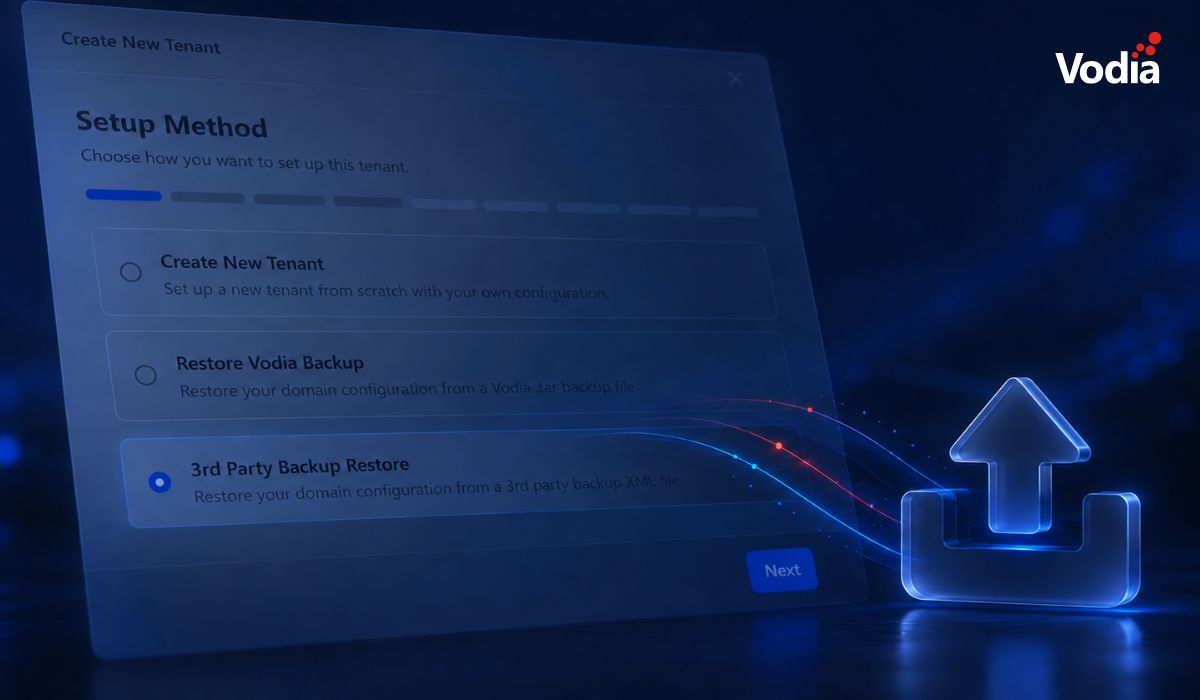
Switching phone systems doesn’t have to mean rebuilding everything from scratch. The Vodia PBX migration tool imports key configuration data from backups, including extensions, ring groups, queues, desk phones, and basic auto-attendant settings. Built into the Vodia Admin Portal, it guides administrators through the import process and reduces repetitive manual work, whether you’re moving 10 extensions or 1,000. Explore what transfers, what needs manual setup, and how the built-in tool reduces repetitive work when moving to Vodia.
Apps have changed how businesses communicate and work, but every digital experience still depends on physical hardware. From smartphones, desk phones, and headsets to networking equipment and cloud servers, reliable infrastructure supports productivity, security, and call quality. Here’s why hardware still matters in an app-first world and what businesses should consider when choosing dependable devices and secure connectivity for the office, hybrid teams, and remote work, while preparing for evolving technology.
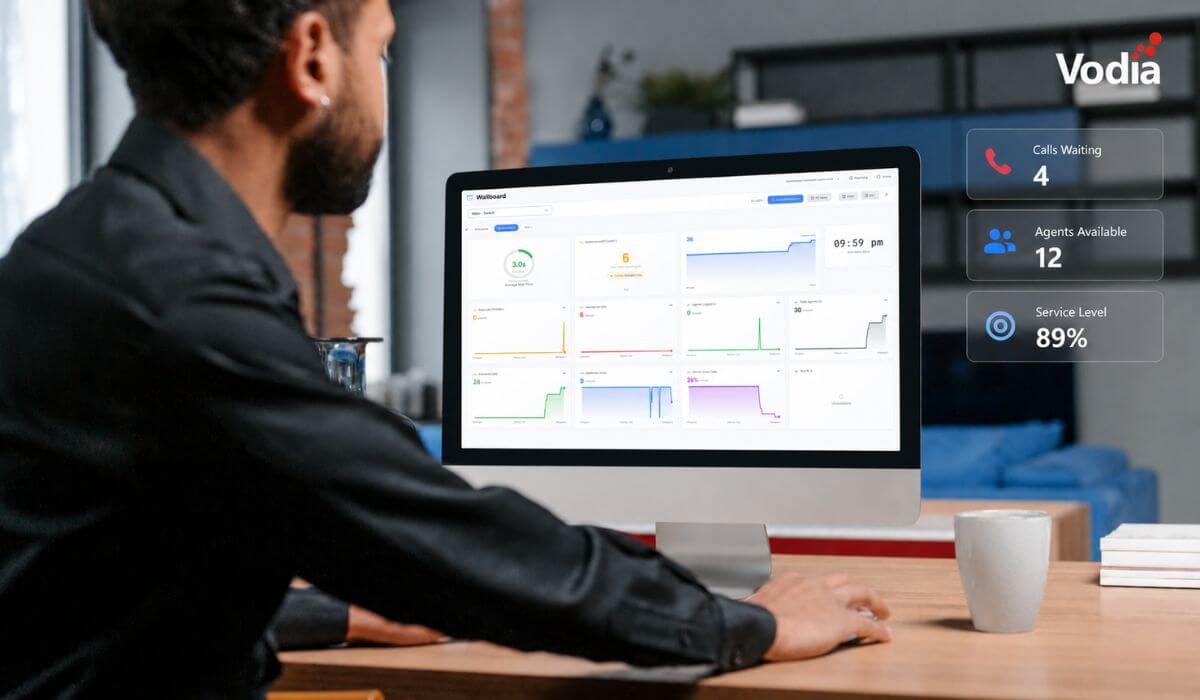
Vodia Wallboards gives supervisors, contact centers, service providers, and operations teams a self-hosted, real-time view of Vodia call queue activity. Monitor waiting, ringing, and active calls; agent availability; service levels; abandoned calls; and queue trends across one or more Vodia PBX systems. Start with a ready-made layout or build a custom wallboard using queue filters, live widgets, AI summaries, and alerts. Display the information your teams need in a browser, on an operations dashboard, or on a dedicated TV screen.
.svg)