Handle with Care: Avoid These Cloud Migration Missteps
Published on:
July 14, 2026
Moving your business phone system to the cloud can improve flexibility, scalability, mobility, and access to modern communication tools, but a successful migration still requires careful planning. From bandwidth and hardware compatibility, disaster recovery, staff readiness, and MSP support, there are several areas businesses need to assess before deployment. Understanding these common risks early can help reduce disruption, avoid unexpected costs, and create a more reliable cloud communication environment.
Why is Voice over Internet Protocol (VoIP) such a strong choice for businesses of all sizes, from enterprises to SMBs? Simply put, it enables unified communications in the cloud.
VoIP enables voice communication to be transmitted via the internet, instead of over traditional or “legacy” telephone lines. It helps companies scale their communications, reduce infrastructure costs, and enhance mobility for remote workers. It also supports unified communications by combining voice with messaging and collaboration platforms. It’s the present and the future of business telephony, and a cornerstone of the digital transformation of any organization.
The current decade has seen a significant increase in the number of companies undertaking digital transformation, especially now that AI has become a core component of business communication, customer service, employee collaboration, and productivity. For many businesses, the flexibility and capabilities of the cloud now far outweigh the benefits of maintaining a legacy phone system.
Step Into the Cloud
Stepping into the cloud is easy. With the right preparation, deployment can be fast and simple, with minimal disruption to operations. It also shouldn’t take long for your team to adjust to new VoIP system features and apps, while the business begins to benefit from reduced telephony costs.
That said, there are a number of missteps an eager organization might make as it embarks on its digital transformation. Let’s take a look at a few of them.
Bandwidth
Sufficient bandwidth is crucial for the deployment of a cloud PBX, particularly as video calls become ever more prevalent in business communication. Any company looking to move to the cloud needs to make sure it has enough bandwidth to support more than voice - the fiber connection has to be fast and robust. It will have to manage a growing amount of bandwidth once the company is operating in the cloud.
Your first step should be a network readiness assessment. As a general planning guideline, you may need at least 100 kbps of upload/download speed for each concurrent call, depending on the codec and network configuration. A quality of service (QoS) policy on each of your routers can also help prioritize voice traffic over general web traffic.
Without sufficient bandwidth and the right network configuration, you may experience dropped calls, subpar audio, delays, and disconnections, especially once other analog devices - such as alarms, elevators, fax machines - are using the same network.
Hardware
With many VoIP systems, you can continue using your existing computers and desk phones, but, prior to installation, you must determine which devices will be compatible with your new system. Older or “end-of-life” desk phones may not be compatible with your new firmware or modern VoIP features. This can result in issues such as one-way audio, unsuccessful provisioning, and failed transfers (and their impact on customer service and employee collaboration).
You need to understand how each of your devices will work within a cloud ecosystem; be prepared for some of them to be incompatible with your new PBX. Unfortunately, this means you might have to let go of any devices you’ve had for more than a decade, as these phones most likely won’t support up-to-date Session Initiation Protocol (SIP) standards. If you do need to replace some or all of your hardware, your Managed Service Provider (MSP) should be able to guide you toward the most suitable devices for your system.
Non-desktop Analog Devices
Once you’ve moved to the cloud, your desk phones aren’t the only devices you need to consider. Your existing environment may also include alarms, electronic doors, emergency phones, public address systems… and even fax machines.
Before beginning the migration, take a complete inventory of all of the analog devices on your premises, so you know what you’re bringing with you.
Some of these systems may be connected to a cloud PBX using analog telephone adapters (ATAs), but compatibility should be confirmed individually. Alarm systems, elevators, emergency phones, and other regulated equipment may have specific technical, safety, or compliance requirements. Your MSP should work with the relevant vendors to determine the best approach for each device.
It’s Different up Here
The right cloud PBX, installed and managed by the right MSP, will be up and running within a day or two, depending on the size and complexity of the deployment. It’s important to understand, however, that you and your team are still going to face a learning curve.
It won’t necessarily be steep, but the sensible approach to the new ecosystem you’re building is to make sure everyone is ready to transition to your cloud system. Provide employees with guidance on the features they will use most often, explain any changes to everyday workflows, and give them a clear place to go when they need help.
With so many new features and options for completing everyday activities, including AI functionalities, it may feel like a lot at first. Your best approach is to become an enthusiastic champion of the system, to stoke your team’s excitement at what the cloud makes possible for everyone.
With the right PBX, the right MSP, and the right preparation, it shouldn’t take long before your staff feels comfortable with the new environment.
Flirting with Disaster
Your cloud phone provider should be at the forefront of data storage, availability, and security. Your system should be hosted within a resilient infrastructure designed to continue operating when individual components fail.
Even with this level of protection, however, you still need to understand what your provider will do in the event of an outage or disaster, and which service level agreements (SLAs) it has in place.
Your provider may safeguard your system across multiple locations, allowing services to fail over to an alternate environment if something happens at the primary data center. Before getting started, ask about redundancy, backups, geographic failover, uptime commitments, recovery procedures, and how quickly service can be restored.
You should also understand what happens to incoming calls when the primary system or internet connection is unavailable. Temporary routing to mobile phones, alternative offices, or backup systems should be planned before an emergency occurs.
Choose the Right MSP
An MSP and its expertise are crucial to any cloud PBX deployment. The best cloud phone system providers work closely with trusted partners who understand their platforms and know how to configure them for different business environments.
Your MSP should do more than install the system. It should assess your network, review your devices, plan your call flows, manage number porting, test the system before launch, train your employees, and provide ongoing support after the migration is complete.
Vodia works closely with MSPs around the world. We don’t simply provide them with our PBX and white-glove support. We also seek their feedback on how we can continue improving our business phone system.
We are committed to innovation at every turn, and much of this innovation is sparked by input from our partners. These relationships are a foundation of our company, helping businesses build reliable, flexible, and future-ready communication environments without making avoidable mistakes along the way.
Thinking about moving to the cloud? Already there, but looking for a system that can take your business communication further? Reach out at sales@vodia.com or +1 (617) 861-3490.
Following a critical PHP security advisory affecting installations worldwide, we temporarily restricted public access to some of our backend services while carrying out necessary upgrades. Access has now been restored, and the affected services are operating normally. The Vodia PBX itself does not use PHP and was not directly affected. We explain what happened, the changes to legacy licensing and TLS support, and why customers running older PBX versions should contact us for upgrade guidance.
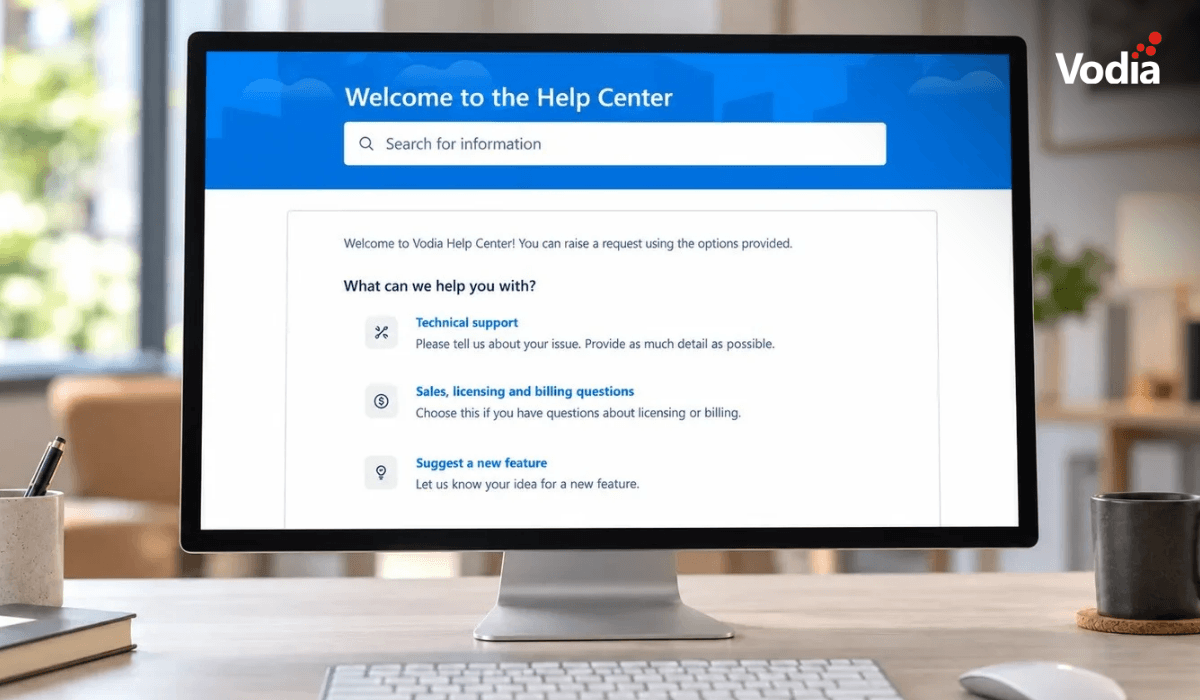
Submitting a support ticket with the right information helps our team understand your issue and reduces follow-up questions. This step-by-step guide walks you through the Vodia Help Center, from describing the problem and attaching diagnostic files to setting the business impact and providing your PBX details. You’ll also learn which call details and timestamps to include, alongside practical tips to keep troubleshooting focused and help our support team investigate your issue more efficiently.
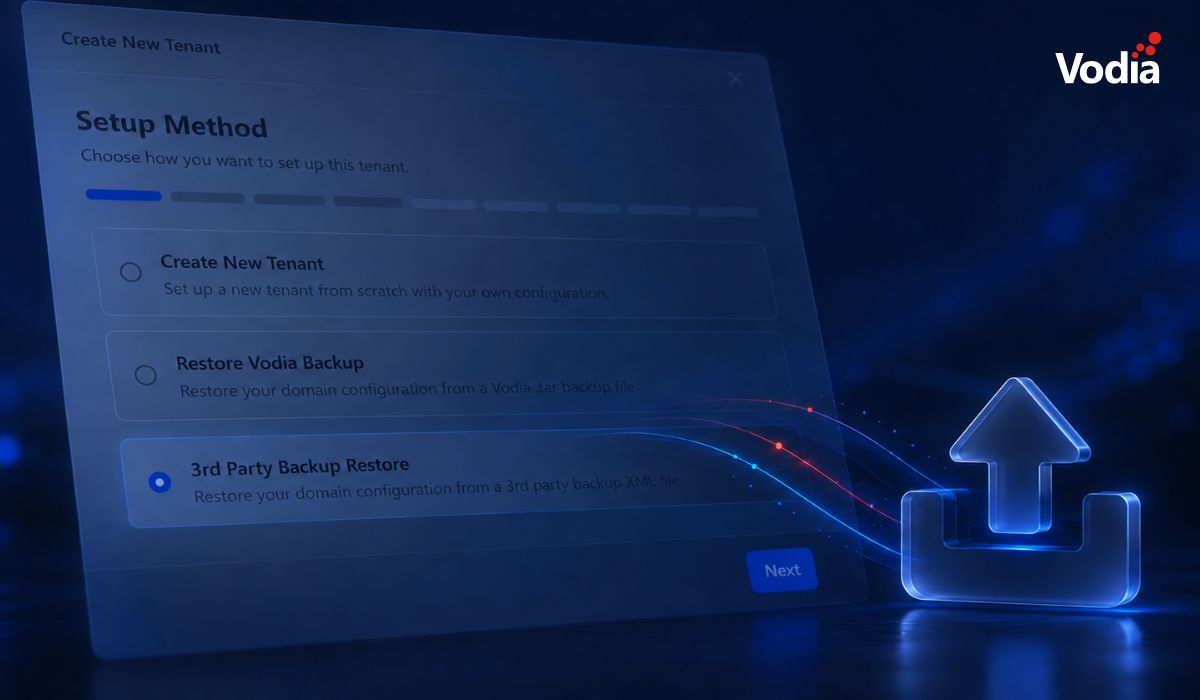
Switching phone systems doesn’t have to mean rebuilding everything from scratch. The Vodia PBX migration tool imports key configuration data from backups, including extensions, ring groups, queues, desk phones, and basic auto-attendant settings. Built into the Vodia Admin Portal, it guides administrators through the import process and reduces repetitive manual work, whether you’re moving 10 extensions or 1,000. Explore what transfers, what needs manual setup, and how the built-in tool reduces repetitive work when moving to Vodia.
.svg)