Amazon Announces Full-Time RTO; Vodia PBX Users Continue to Work from Anywhere
Published on:
September 27, 2024
Amazon's recent decision to enforce a full-time return-to-office (RTO) policy contrasts with the growing trend of remote and hybrid work. While larger companies like Amazon can afford this shift, smaller businesses benefit from flexible WFH models. Vodia PBX enables companies to thrive remotely, offering a feature-rich, cloud-based phone system that connects teams from anywhere. With seamless CRM integration and powerful communication tools, Vodia supports organizations in their digital transformation. Learn why more than half a million users worldwide trust Vodia for their business communication needs.
It looks like Amazon, one of the leaders in work-from-home (WFH) during and after the COVID-19 pandemic may be spearheading a pivot toward full-time return-to-office (RTO), reversing a number of policies it’s implemented since the pandemic. Having permitted its teams to be fully remote after the pandemic hit, the company’s current policy is a minimum of three days onsite, which Amazon, the USA’s second-largest employer, implemented in February of last year.
On September 16, Amazon CEO Andy Jassy published a corporate-wide message, “Strengthening our culture and teams,” in which he announced Amazon would enforce a five-day per week RTO for all employees beginning January 2, 2025:
“...we’ve decided that we’re going to return to being in the office the way we were before the onset of COVID. When we look back over the last five years, we continue to believe that the advantages of being together in the office are significant.”
Is Amazon kickstarting a trend? A few other U.S. multinationals have demanded employees RTO full-time, including Boeing, JPMorganChase and UPS.
A USA Today poll from April of this year, however, seems to indicate WFH won’t be packed off to the office anytime soon. According to the April 3rd article, 22 percent of the American workforce will be remote by 2025. Some other key statistics:
Around 22 million employed adults in the USA, approximately 14 percent of all employed adults, work from home full-time
One-third of workers in the USA who can work remotely do so full-time, with 41 percent working a hybrid setup at least part-time
58 percent white-collar workers prefer to work remotely at least three days a week.
Only 16 percent of white-collar workers would consider a role that requires five days per week in an office
42 percent of office workers would take a 10 percent pay cut to work remotely
Approximately 33 percent of hiring managers believe remote work has increased staff productivity
Even if Amazon brings everyone back to the office full-time, it looks like WFH is here to stay. While larger companies can afford the office space and infrastructure RTO requires, smaller enterprises and SMBs continue to gain from their remote and hybrid models, which help them reduce expenses and attract talented employees for whom full-time RTO is a dealbreaker.
The Vodia PBX is an industry-leading business phone system that makes WFH, or from anywhere, possible. It’s the ultimate cloud phone system, one that connects your entire organization, even if everyone is working from home, from a hotel, from a Starbucks…Vodia makes any endpoint - laptop, smartphone, tablet - an office extension, so your staff can truly work from anywhere. It’s the first and best step you can take in the digital transformation of your organization.
We give you the richest suite of business communications features available, including auto attendant, SMS, paging, separation of personal and work calls, conference calls and call recording. The Vodia PBX integrates seamlessly with CRMs such as HubSpot, Oracle, Salesforce and Zoho, and with Microsoft Teams. Our best-in-class phone system is easy to install, cost-effective and simple to use; it’s secure, scalable and robust. Working remote and need to run your business from your smartphone? We make it possible.
And just so you know, we don’t have an RTO policy at Vodia: our global, dispersed staff works from home or at satellite offices in Beijing, Berlin, Boston, Cyprus, Hong Kong and Sydney. So we don’t just give you the best phone system for remote and hybrid work - we use it ourselves.
Want to know why more than half a million users worldwide, and counting, have made Vodia their first choice for business communication? Give us a call at +1 617-861-3490 or email us at sales@vodia.com and we’ll tell you all about it.
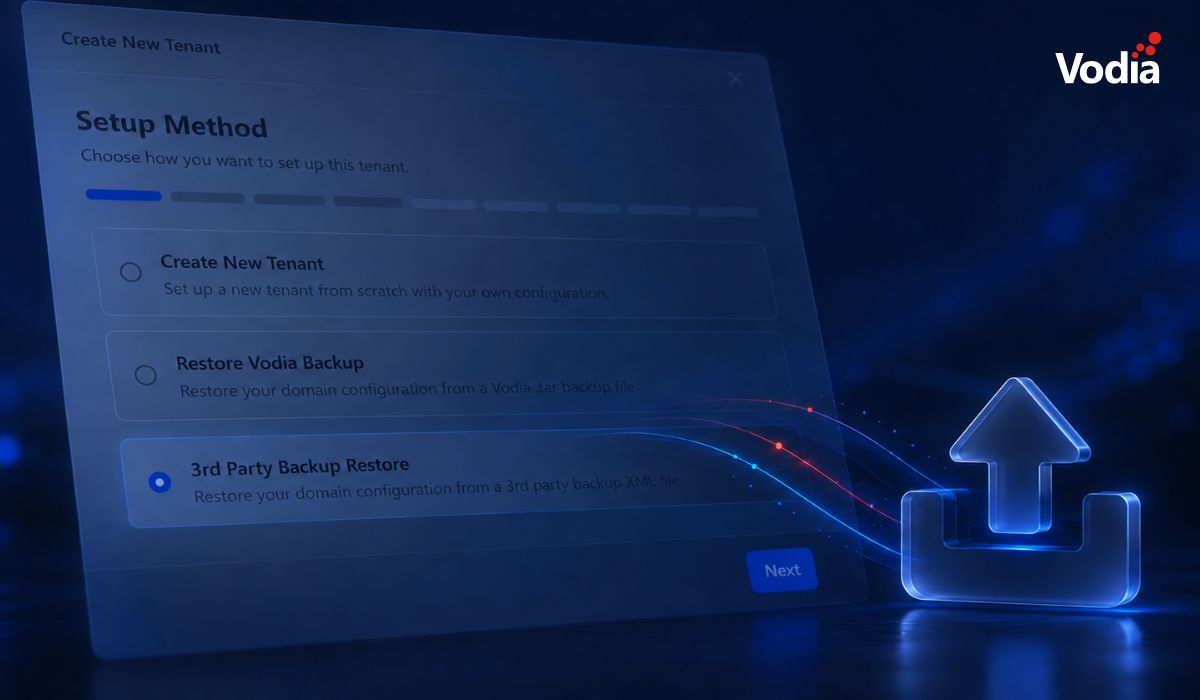
Switching phone systems doesn’t have to mean rebuilding everything from scratch. The Vodia PBX migration tool imports key configuration data from backups, including extensions, ring groups, queues, desk phones, and basic auto-attendant settings. Built into the Vodia Admin Portal, it guides administrators through the import process and reduces repetitive manual work, whether you’re moving 10 extensions or 1,000. Explore what transfers, what needs manual setup, and how the built-in tool reduces repetitive work when moving to Vodia.
Apps have changed how businesses communicate and work, but every digital experience still depends on physical hardware. From smartphones, desk phones, and headsets to networking equipment and cloud servers, reliable infrastructure supports productivity, security, and call quality. Here’s why hardware still matters in an app-first world and what businesses should consider when choosing dependable devices and secure connectivity for the office, hybrid teams, and remote work, while preparing for evolving technology.
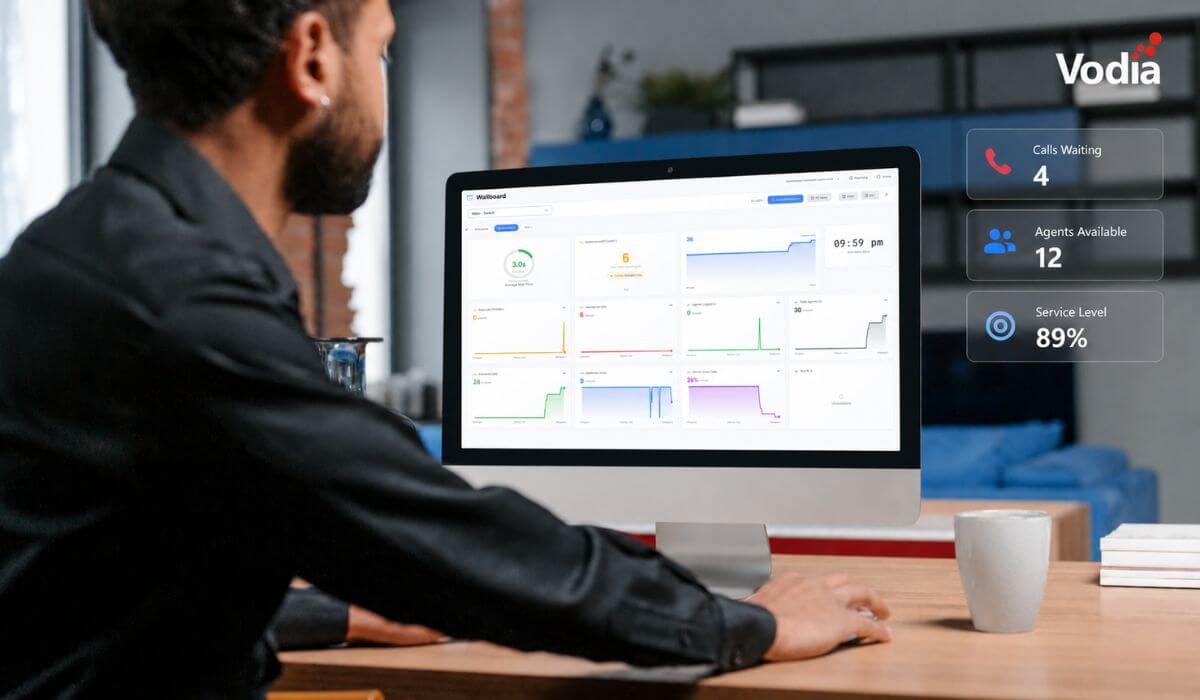
Vodia Wallboards gives supervisors, contact centers, service providers, and operations teams a self-hosted, real-time view of Vodia call queue activity. Monitor waiting, ringing, and active calls; agent availability; service levels; abandoned calls; and queue trends across one or more Vodia PBX systems. Start with a ready-made layout or build a custom wallboard using queue filters, live widgets, AI summaries, and alerts. Display the information your teams need in a browser, on an operations dashboard, or on a dedicated TV screen.
.svg)