Vodia’s new SMS Management feature centralizes all customer SMS provider connections under SIP Trunks for each tenant. It allows you to easily add supported providers and manage SMS numbers with custom settings like name, number, provider and message routing. Policies can be created for opt-in/opt-out messaging, welcome messages, message retention and conversation management with keywords. Additionally, menu selections offer customizable options for customers, such as providing information or directing them to URLs. This enhances SMS management by streamlining provider setup and message handling for better customer interaction.
Under Numbers, you can specify the SMS number for the user to check the values below:
Name: Name with customer or group name
Number: Add the SMS DID
Policy: If no policy has been created, choose "none"
Provider: Choose your provider
URL prefix: This prefix can be unique for each number: set the prefix you want in the provider portal and use that prefix when you assign the SMS number
Source: Souce can come to the assigned extension
Destination: Destination messages can be sent to any other extension or to the same extension
Policies
You can create policies for your SMS messages: check below for what each policy can be used
Names Policy: Name the Policy
Opt-in or opt-out: Choose what kind of policy this will be "opt-in or out"
Welcome message: Write a welcome message for the customer
Resend welcome message after: choose the number of days for the duration of the message
Keyword for stopping conversation: Choose a keyword - for example "Stop"
Keyword for resuming conversation: Create a message if the user would like to continue
Duration for keeping messages: Choose the number of days Vodia will keep the messages
Allow only text messages: Turn on or off to only allow texting
Menu selection
In this section, you can create a set of destinations for the customer under the first box with a name for the menu, which can be anything, and then the message box. Themessage box can contain information about a product - you can include a URL for the customer to explore and provide a list of actions from which they can choose.
Following a critical PHP security advisory affecting installations worldwide, we temporarily restricted public access to some of our backend services while carrying out necessary upgrades. Access has now been restored, and the affected services are operating normally. The Vodia PBX itself does not use PHP and was not directly affected. We explain what happened, the changes to legacy licensing and TLS support, and why customers running older PBX versions should contact us for upgrade guidance.
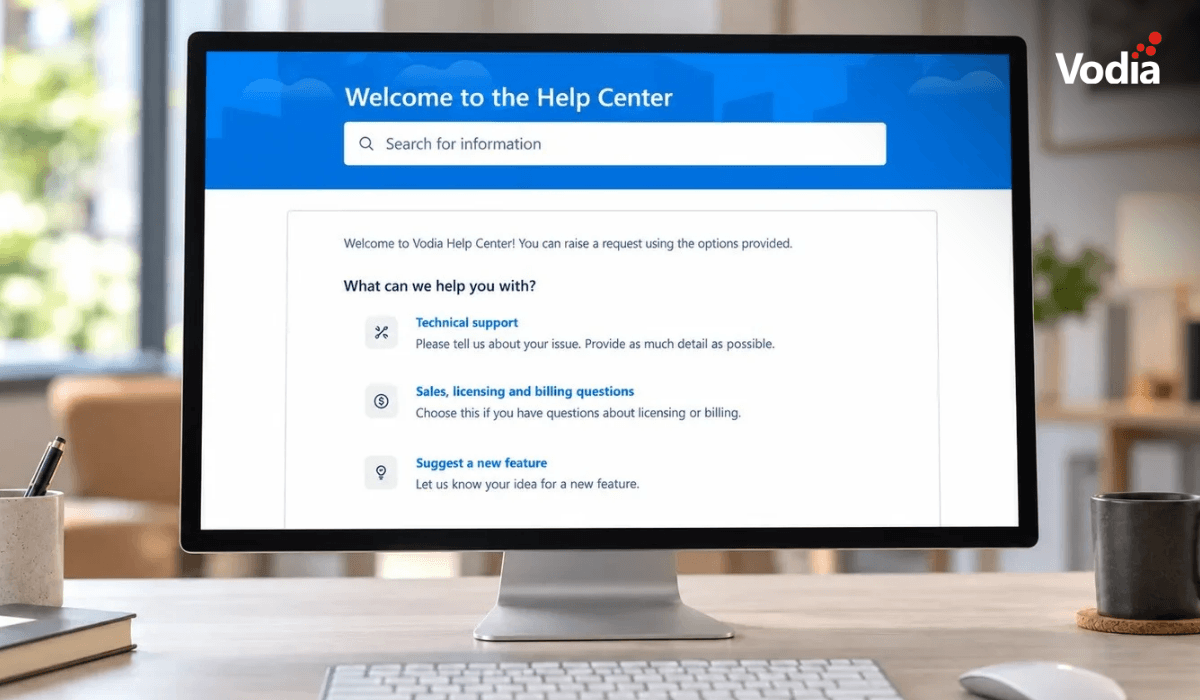
Submitting a support ticket with the right information helps our team understand your issue and reduces follow-up questions. This step-by-step guide walks you through the Vodia Help Center, from describing the problem and attaching diagnostic files to setting the business impact and providing your PBX details. You’ll also learn which call details and timestamps to include, alongside practical tips to keep troubleshooting focused and help our support team investigate your issue more efficiently.
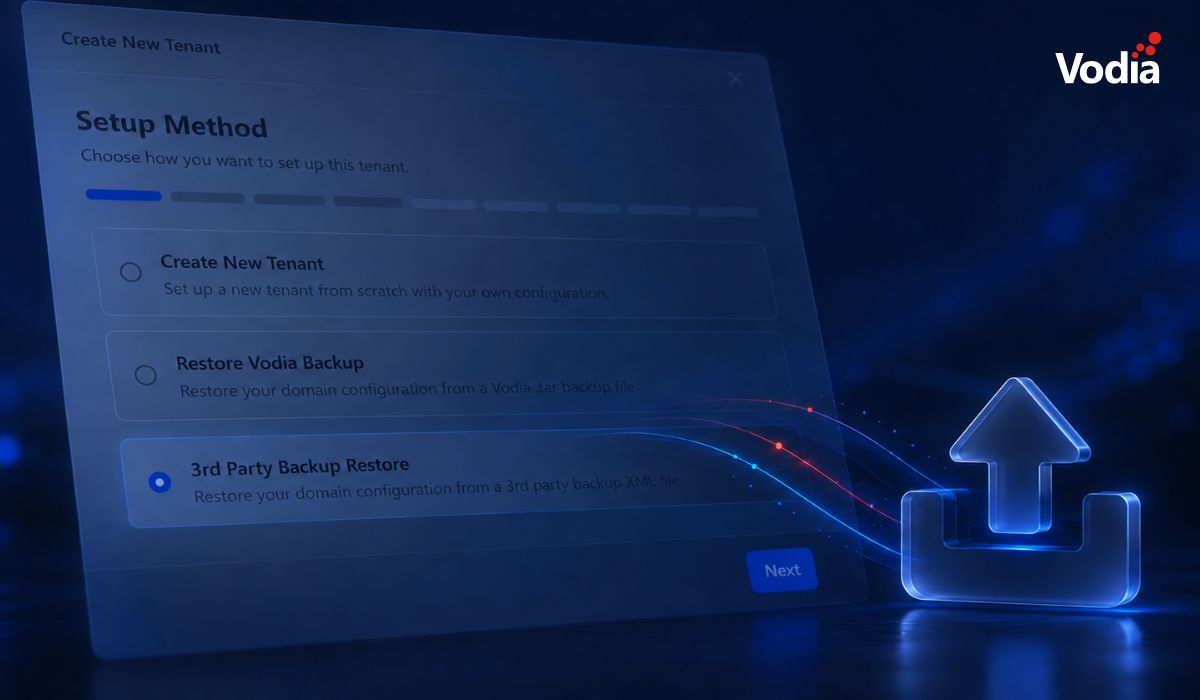
Switching phone systems doesn’t have to mean rebuilding everything from scratch. The Vodia PBX migration tool imports key configuration data from backups, including extensions, ring groups, queues, desk phones, and basic auto-attendant settings. Built into the Vodia Admin Portal, it guides administrators through the import process and reduces repetitive manual work, whether you’re moving 10 extensions or 1,000. Explore what transfers, what needs manual setup, and how the built-in tool reduces repetitive work when moving to Vodia.
.svg)