The Vodia PBX and the OpenAI Realtime API for Healthcare
Published on:
April 24, 2025
OpenAI’s Realtime API brings low-latency, multimodal voice capabilities to developers, and Vodia PBX is already harnessing its power. By enhancing IVR with backend JavaScript, Vodia enables real-time AI-driven call interactions, eliminating the need for patterns or webhooks. This integration has a significant impact on healthcare, enabling patients to book or cancel appointments, refill prescriptions, request records, and more, all without speaking to staff, and in multiple languages. This reduces wait times and frees up medical staff to focus on in-person care. With full Microsoft Teams support, the Vodia PBX and OpenAI Realtime API integration streamlines healthcare workflows, boosting efficiency and improving patient outcomes through intelligent, voice-powered automation.
Open AI released a public beta of the Realtime API, and now developers can build low-latency, multimodal experiences in their apps. The beta is similar to the Advanced Voice Mode of ChatGPT, as it supports speech-to-speech conversations with the six preset voices already supported in the API.
Audio input in the Chat Completions API is now also available - the model responds with a choice of audio/text when developers pass audio or text inputs into GPT-4o. This makes it possible for users to speak to the chatbot, with apps and browsers, and by connecting via a telephone system to the API.
Vodia PBX: A Voice Gateway to AI
Vodia has developed a beta version of its PBX that brings this powerful new voice interface into the world of business telephony. The enhanced IVR functionality executes backend JavaScript. This backend JavaScript connects to live call audio, seamlessly transmitting it to and from OpenAI. This approach eliminates the need for patterns or webhooks.
Boosting Productivity and Collaboration
Integrating AI with your communication systems can revolutionize the way your business operates. From automating repetitive tasks to increasing the efficiency of your workflows, collaboration between Vodia PBX and OpenAI’s Realtime API streamlines operations, enhances collaboration - especially for Microsoft Teams users - and provides intelligent automation. And MS Teams users can tap into AI-powered features, thanks to the integration of Teams with Vodia.
Why Healthcare Benefits Most
The integration of Vodia with the OpenAI Realtime API is an outstanding solution for healthcare, as patients require regular telephone contact. It builds an excellent ecosystem for healthcare providers, thanks to its myriad call center features:
AI provides IVR, crucial for any organization with extensions and/or departments
Auto-attendant for scheduling
Bot for appointments and prescription refills
Human, readable language (no coding involved)
Mailbox control
Multiple languages, so the IVR can reply in the language of the caller
Tenant-based, real-time phone system
Vodia PBX and OpenAI’s Realtime API can transform healthcare communication for medical offices, nursing homes, and more.
Empowering Patients, Supporting Staff
The Vodia PBX and the OpenAI Realtime API can transform healthcare communication, thanks to a system of bots that can respond to any patient (in any language). Patients, both outpatient and inpatient/residential, can accomplish numerous tasks without having to speak to a practitioner or staff member:
Book/Cancel appointments
Request prescription refills
Request copies of medical records
Provide post-appointment updates to nurses/physicians
Request emergency assistance
Call and set do-not-disturb hours (DND)
Order meals and request housekeeping
Pay bills
The integration of Vodia with OpenAI’s Realtime API streamlines medical care by enabling patients to manage their care—appointments, prescriptions, and more—without waiting in long call queues to speak to a staff member (and leaving admin medical staff more time to address more pressing, onsite needs). The combination of Vodia with OpenAI’s Realtime API provides healthcare facilities with a record of patient requests, providing up-to-the-minute case information and ultimately promoting better treatment compliance and patient outcomes.
Watch the Webinar & Try It Yourself
To see the integration in action, we invite you to watch both of our detailed webinars. The first, Integrating OpenAI's Realtime API with Vodia PBX, offers a technical deep dive into how Vodia connects its PBX with OpenAI’s Realtime API. It explains how intelligent IVRs and backend JavaScript execution enable real-time voice interactions without the need for webhooks or patterns. Our most recent webinar, Real-Time Media Streaming in Vodia PBX: AI, Call Transcription, and Security in V69.5.6, expands on these capabilities. It highlights how real-time media streaming, integrated AI, and enhanced security features are now embedded into the latest version of the Vodia PBX. Both sessions are essential viewing for anyone looking to modernize their communication systems with AI-powered automation.
Once you’ve watched the webinars, we encourage you to try a live demo of the integration. You’ll need to run the Vodia PBX version 69.5.3 or higher, which includes our newest version, 69.5.6. For quick setup, deploy our PBX with a pre-configured DigitalOcean 1-click-app - spin up your instance in the cloud instantly with minimal setup (you can use any license with an IVR node). Contact us, sales@vodia.com or +1 (617) 861-3490, so we can provide you with a 60-day demo license and show you how to take the best possible care of your healthcare communications.
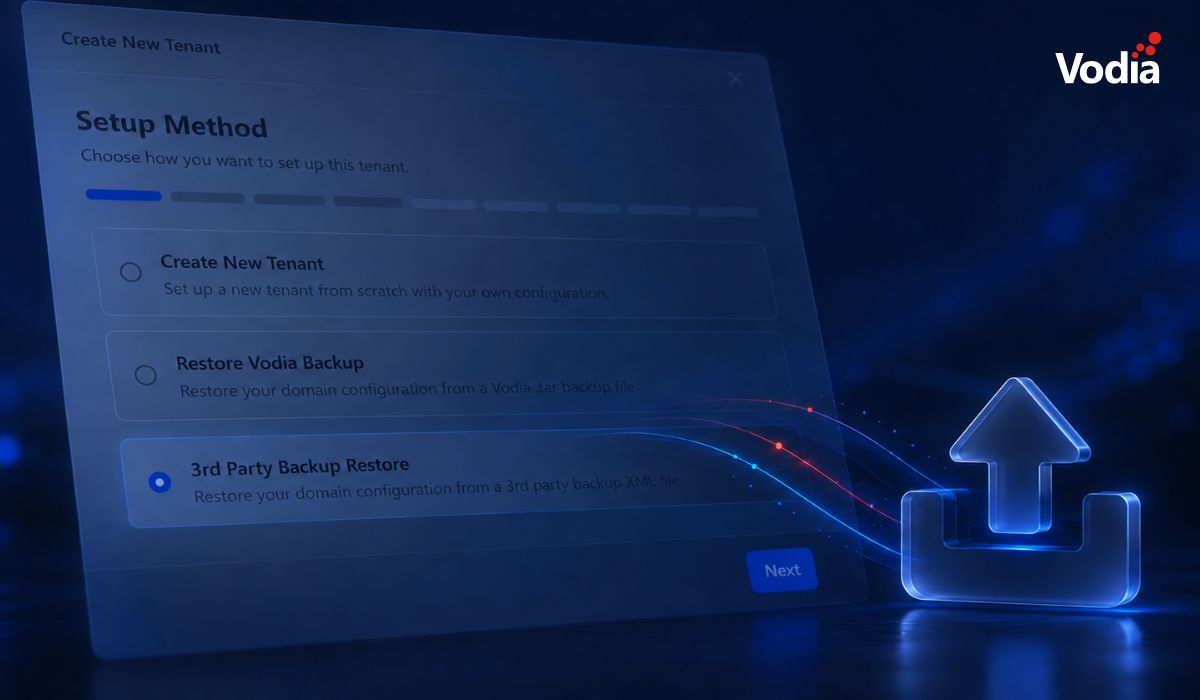
Switching phone systems doesn’t have to mean rebuilding everything from scratch. The Vodia PBX migration tool imports key configuration data from backups, including extensions, ring groups, queues, desk phones, and basic auto-attendant settings. Built into the Vodia Admin Portal, it guides administrators through the import process and reduces repetitive manual work, whether you’re moving 10 extensions or 1,000. Explore what transfers, what needs manual setup, and how the built-in tool reduces repetitive work when moving to Vodia.
Apps have changed how businesses communicate and work, but every digital experience still depends on physical hardware. From smartphones, desk phones, and headsets to networking equipment and cloud servers, reliable infrastructure supports productivity, security, and call quality. Here’s why hardware still matters in an app-first world and what businesses should consider when choosing dependable devices and secure connectivity for the office, hybrid teams, and remote work, while preparing for evolving technology.
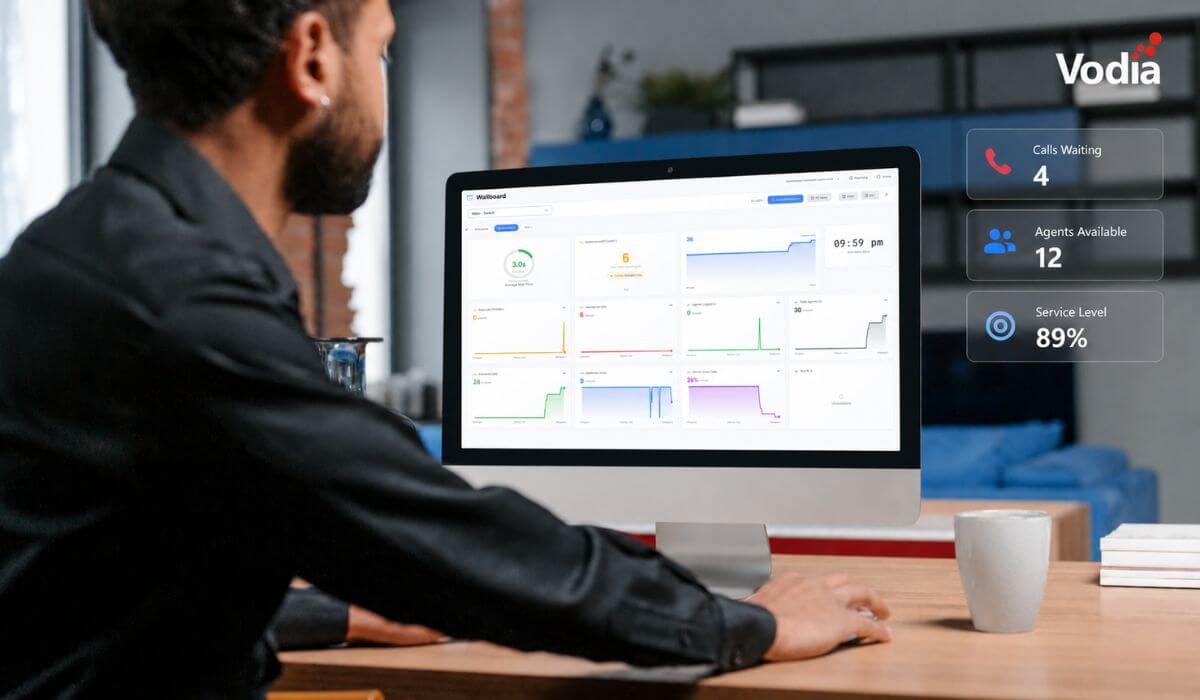
Vodia Wallboards gives supervisors, contact centers, service providers, and operations teams a self-hosted, real-time view of Vodia call queue activity. Monitor waiting, ringing, and active calls; agent availability; service levels; abandoned calls; and queue trends across one or more Vodia PBX systems. Start with a ready-made layout or build a custom wallboard using queue filters, live widgets, AI summaries, and alerts. Display the information your teams need in a browser, on an operations dashboard, or on a dedicated TV screen.
.svg)