Podcast | Why Hotel Room Phones Still Matter in the Age of AI
Published on:
December 10, 2025
Hospitality is undergoing a major shift as AI and cloud telephony reshape guest interactions. In this podcast, Christian Stredicke discusses which changes genuinely improve hotel operations and guest experience, why room phones still matter, and how modern PBXs can balance automation with the human touch that defines real hospitality. He also examines on-prem versus cloud deployments, renovation timing, emergency calling, and the ways the right system can reduce costs while raising service quality.
Vodia is one of the industry’s leading providers of the most feature-rich, robust, scalable, and secure communication platform for hotels. Our VoIP PBX gives hospitality organizations AI capabilities and call center functionality, and it integrates with the world’s best PMS solutions. We are a core component of guest communications at boutique and international hotels worldwide.
Vodia CEO Christian Stredicke, PhD, loves travel, and he is enthusiastic and excited about the changes VoIP telephony and AI are bringing to the hospitality industry. He recently sat down with Doug Green, publisher of Technology Reseller News, for a podcast to discuss the ongoing digital transformation of hospitality communications.
Vodia has always taken a widescreen view of hospitality communications. “At the end of the day, you can see the hotel as a call center,” says Dr. Stredicke. “You’re not calling a specific person, you’re calling a department, so we’re talking about call distribution, wait times, redirects…”
As the podcast begins, Mr. Green points out how “the role of the guest phone has been reduced,” and he wonders if we still need phones in hotel rooms. According to Dr. Stredicke, there's no reason to go without them.
“Many hotels still use analog phones, which is very easy, obviously. Many rooms have the 2-wire in the wall, and it would be a lot of work to replace that. And we’ve recently seen that many manufacturers come up with beautiful hospitality devices, hotel phones, they are really designed for hotel rooms.”
Vodia has added substantial AI capability to its PBX, and this can now manage the simple calls usually made through the front desk or a switchboard operator, such as room-to-room calls, bell service, housekeeping…even room service. But Dr. Stredicke believes the best hotels will never abandon the person-to-person interactions underpinning real hospitality.
“Especially for really good hotels, I think that’s what makes up a good hotel, this kind of service, the human factor. That’s still not possible with AI. The human factor is still totally necessary.” Dr. Stredicke avers it’s best to look for the best ways to deploy AI in hotel phone systems, but to resist the urge to make its use comprehensive.
Mr. Green and Dr. Stredicke also discuss the differences between on-prem and cloud for hotels, emergency calls, how the best time to upgrade a hospitality phone system is during renovations, and how the right phone system can improve guest satisfaction, reduce costs, and make an in-house IT team unnecessary. “In most cases,” says Dr. Stredicke, “a good phone system pays for itself.”
“At Vodia, we are seeing what we can do to make the guest experience better, to make the phone system work better in a hotel environment,” Dr. Stredicke says.
Vodia Networks, Inc. provides B2B cloud communications solutions for enterprises, contact centers, and service providers. Its PBX software offers a broad range of business telephony features for on-premise and cloud deployments on Windows, Linux, and Mac. Fully SIP-compliant, Vodia integrates with numerous SIP devices and trunking providers for flexible telephony. Its multi-tenant platforms support desk phones, softphones, APIs, and third-party CRM integrations. Vodia empowers partners and users with world-class cloud PBX and personalized support to ensure success. The company operates globally, with offices in Boston, USA, and Berlin, Germany. Visit Vodia on LinkedIn, X and YouTube.
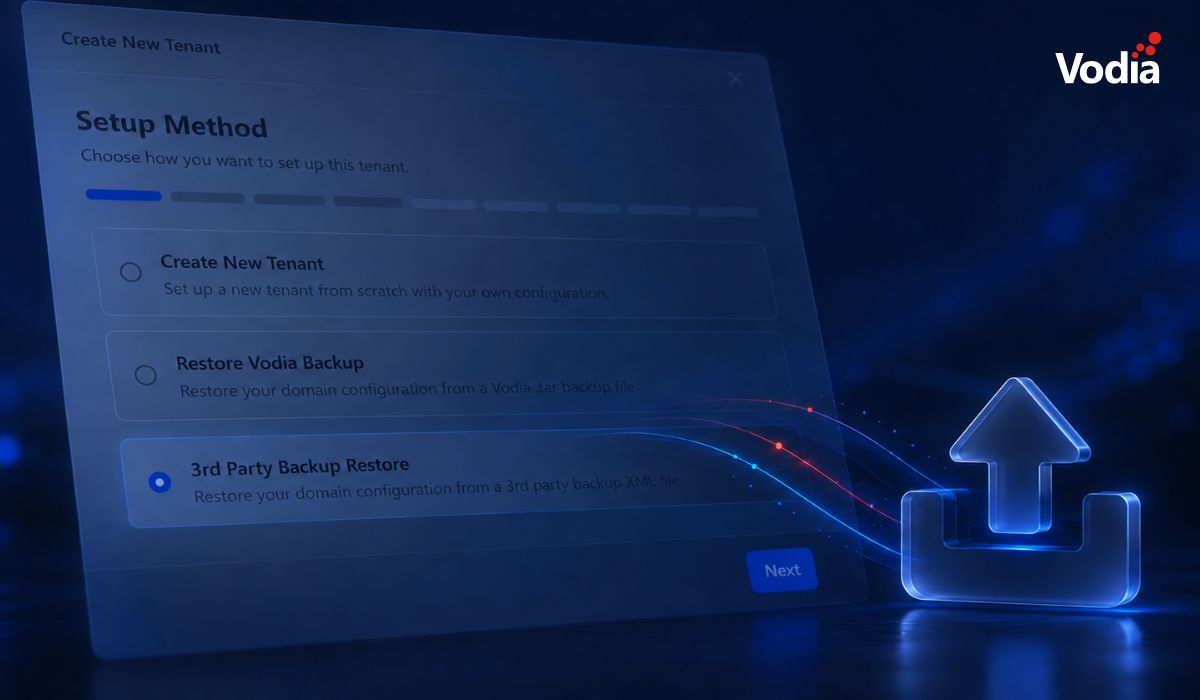
Switching phone systems doesn’t have to mean rebuilding everything from scratch. The Vodia PBX migration tool imports key configuration data from backups, including extensions, ring groups, queues, desk phones, and basic auto-attendant settings. Built into the Vodia Admin Portal, it guides administrators through the import process and reduces repetitive manual work, whether you’re moving 10 extensions or 1,000. Explore what transfers, what needs manual setup, and how the built-in tool reduces repetitive work when moving to Vodia.
Apps have changed how businesses communicate and work, but every digital experience still depends on physical hardware. From smartphones, desk phones, and headsets to networking equipment and cloud servers, reliable infrastructure supports productivity, security, and call quality. Here’s why hardware still matters in an app-first world and what businesses should consider when choosing dependable devices and secure connectivity for the office, hybrid teams, and remote work, while preparing for evolving technology.
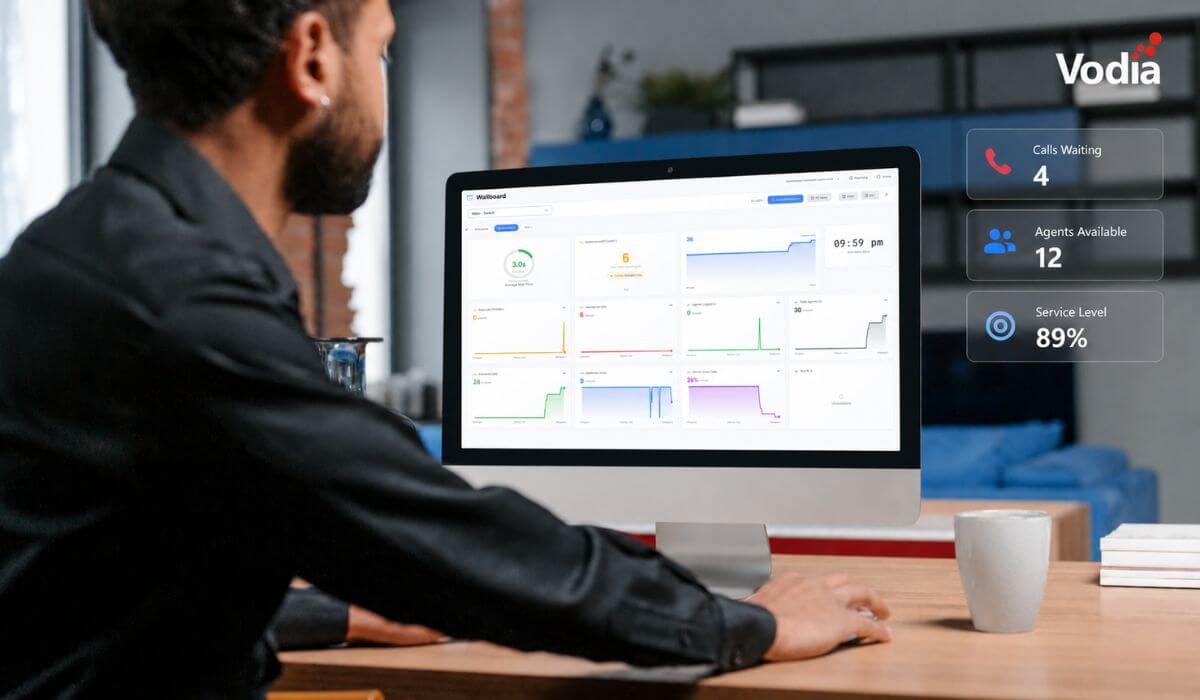
Vodia Wallboards gives supervisors, contact centers, service providers, and operations teams a self-hosted, real-time view of Vodia call queue activity. Monitor waiting, ringing, and active calls; agent availability; service levels; abandoned calls; and queue trends across one or more Vodia PBX systems. Start with a ready-made layout or build a custom wallboard using queue filters, live widgets, AI summaries, and alerts. Display the information your teams need in a browser, on an operations dashboard, or on a dedicated TV screen.
.svg)