Hot desking allows employees to log in to any available phone in an office, enabling them to retain their direct numbers, caller ID and voicemail access from any desk. This flexibility reduces the need for dedicated workstations, helping companies cut costs on office space and equipment while enhancing mobility and adaptability for employees. It also fosters communication and collaboration by letting employees switch workspaces as needed. The Vodia PBX hot desking feature supports this functionality by allowing users to easily log in and out of phones using a secure PIN, ensuring seamless call handling and improved productivity.
Hot desking allows an employee to set up shop at any desk or office in the building. They can log in to any SIP desktop phone in the office by dialing the Vodia star code *70 to hot desk to any available phone. The user also keeps his or her DID phone numbers and Caller ID attributes. The employee can make and receive phone calls from a personal phone number and access voicemail. If the employee needs to move to another location, he or she can simply log out of the VoIP phone and log in to another one.
Less Expensive
Hot desking can minimize the need for office space and is often used as a cost-reduction method. Hot desking allows companies to purchase a limited quantity of phones but gives each employee his or her own extension.
Boosts Communication and Collaboration
Allows multiple users to use the same desk and phone, although at different times
Hot desking can be used on a temporary or permanent basis
Outbound calls from the hot desking phone will reflect the user’s caller ID
All calls made to the user’s extension (or as part of a hunt group or agent group) will be routed to the new destination
Boosts Productivity
Any SIP device can be used for hot desking
Users can move to any part of the building and log in to any SIP-enabled phone
Workers can rotate the phone, reducing new equipment purchasing costs
How to Hot desk with Vodia PBX
Note: Users must set their voicemail PIN before they can use the hot desking feature.
The PIN is used in several areas of the system (e.g., when a user accesses the voicemail system from another extension or from an outside line when calling in to the system from the cell phone when using the calling card feature, and when hot-desking). When you create extensions, you can leave the PIN field empty and opt to have users set up their own PINs. Once a PIN has been set up, no one other than a user registered with the extension credentials will be able to go to the mailbox.
Go to the SIP desktop phone where you will be hot desking
Dial *70 and press the confirm button on the telephone keypad
Enter your extension number when prompted
Enter your voicemail PIN code for the extension number when prompted
The system will acknowledge the hot desking feature is in service
Audio example:
Note: The system will automatically log a user out of a hot desk each night. Also, after activating the hot desk feature, users will be notified via email that a status change has been initiated on their extension.
To log out of a hot desk:
To log out of a hot desk, users must dial *70 and the extension number from either the location currently registered as a hot desk or from a phone that's been configured to the extension. The system will acknowledge hot desking is no longer in service.
Note: Hot desking has limitations. Telephone preferences, such as ring tones, address book programming, etc., cannot be moved to another desk.
Following a critical PHP security advisory affecting installations worldwide, we temporarily restricted public access to some of our backend services while carrying out necessary upgrades. Access has now been restored, and the affected services are operating normally. The Vodia PBX itself does not use PHP and was not directly affected. We explain what happened, the changes to legacy licensing and TLS support, and why customers running older PBX versions should contact us for upgrade guidance.
Submitting a support ticket with the right information helps our team understand your issue and reduces follow-up questions. This step-by-step guide walks you through the Vodia Help Center, from describing the problem and attaching diagnostic files to setting the business impact and providing your PBX details. You’ll also learn which call details and timestamps to include, alongside practical tips to keep troubleshooting focused and help our support team investigate your issue more efficiently.
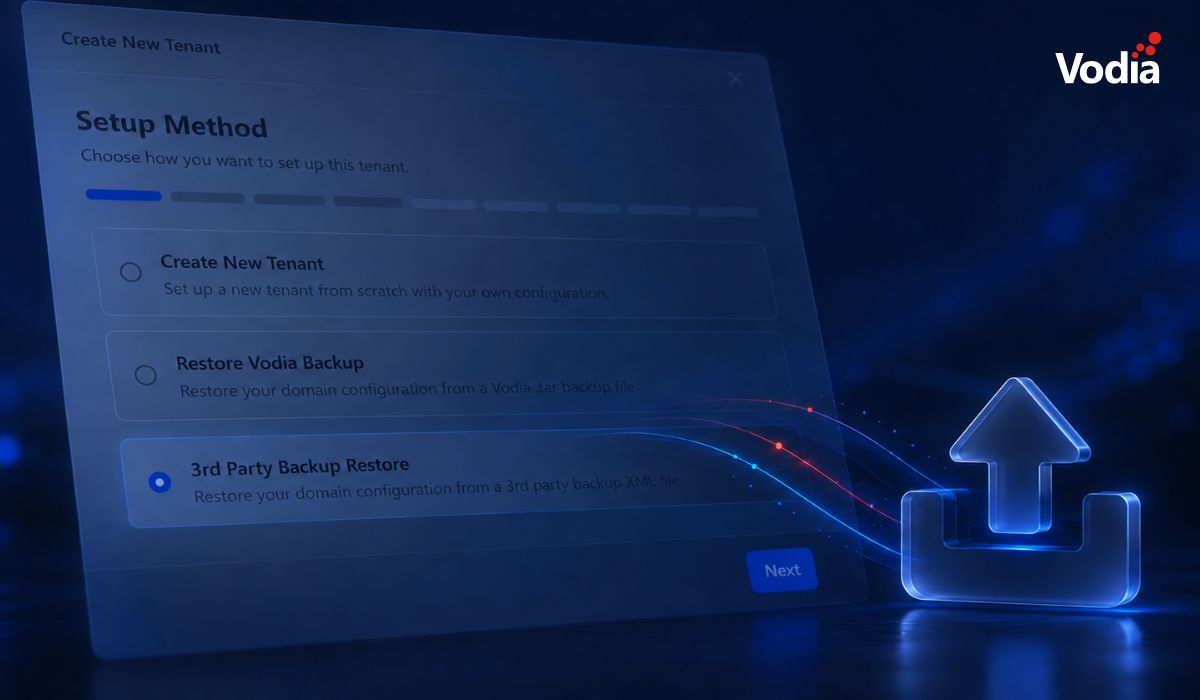
Switching phone systems doesn’t have to mean rebuilding everything from scratch. The Vodia PBX migration tool imports key configuration data from backups, including extensions, ring groups, queues, desk phones, and basic auto-attendant settings. Built into the Vodia Admin Portal, it guides administrators through the import process and reduces repetitive manual work, whether you’re moving 10 extensions or 1,000. Explore what transfers, what needs manual setup, and how the built-in tool reduces repetitive work when moving to Vodia.
.svg)