Vodia PBX now offers real-time call transcription through a seamless integration with Whisper AI, OpenAI’s advanced speech recognition system. With support for multiple languages, technical vocabulary, and noisy environments, Whisper delivers accurate transcriptions even in complex call scenarios. Administrators can enable transcription per tenant using an OpenAI API key, making setup simple and flexible. Once active, all calls are automatically transcribed and accessible in the user portal for easy review and record-keeping. This powerful integration brings enhanced clarity, compliance, and insight to voice communication—whether you're managing support teams, analyzing conversations, or working across language barriers.
Vodia is pleased to announce another enhancement to our phone system - call transcription with Whisper AI. This seamless integration enables Vodia customers to deploy Whisper AI speech-to-text capability within their communications ecosystem, and to configure it for individual tenants.
Whisper, developed by OpenAI, is an Automatic Speech Recognition (ASR) system. Trained on nearly three quarters of a million hours of supervised multilingual and multitask data from the Web, Whisper deftly handles technical language, background noises, and accents (thanks to this diverse, massive data set). It transcribes in a multitude of languages and translates all of them into English.
The Whisper architecture, an encoder-decoder transformer, is a simple, stem-to-stern approach: it separates audio into 30-second segments, which are then converted into a log-Mel spectrum and delivered through an encoder; the decoder anticipates the correct text caption, combined with specific tokens that steer the single model to accomplish numerous tasks, including multilingual speech transcription, speech translation to English, and timestamps at phrase-level.
Vodia announced a beta version of our PBX that connects a phone system to OpenAI realtime API (beta version) in November of 2024. We are delighted we can now provide our customers with a cloud pathway to leverage the power of Whisper AI.
Getting Started with OpenAI Cloud Transcription
To utilize OpenAI's cloud transcription, an OpenAI account and API key are required.
OpenAI Account: Navigate to the OpenAI platform and create or log in via Google, Microsoft, or email.
API Key Retrieval: Access the API Keys page, generate a new secret key, and securely copy it. This key is displayed only once.
Vodia Integration: Within tenant general settings, enable transcription and input the OpenAI API key.
Upon completion, all calls will be transcribed and available within the user portal.
Accessing Call Transcriptions
To view the transcribed content, simply log in to your user portal, navigate to the History section, select the desired call, and review the Call Content area.
Following a critical PHP security advisory affecting installations worldwide, we temporarily restricted public access to some of our backend services while carrying out necessary upgrades. Access has now been restored, and the affected services are operating normally. The Vodia PBX itself does not use PHP and was not directly affected. We explain what happened, the changes to legacy licensing and TLS support, and why customers running older PBX versions should contact us for upgrade guidance.
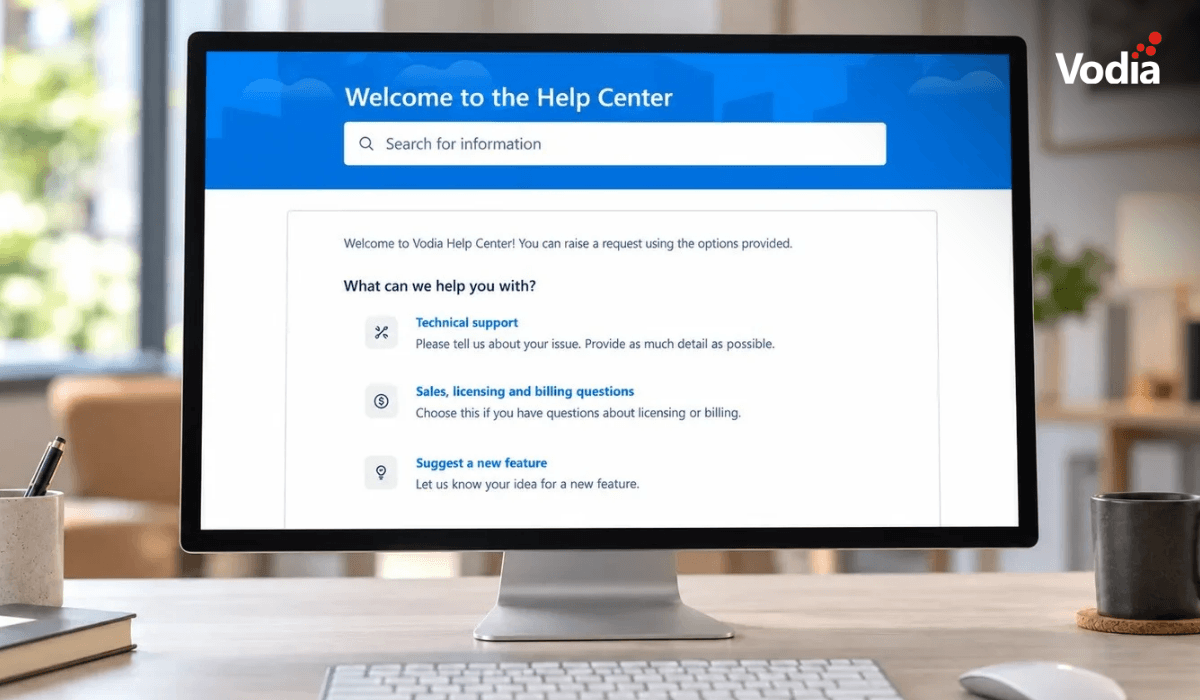
Submitting a support ticket with the right information helps our team understand your issue and reduces follow-up questions. This step-by-step guide walks you through the Vodia Help Center, from describing the problem and attaching diagnostic files to setting the business impact and providing your PBX details. You’ll also learn which call details and timestamps to include, alongside practical tips to keep troubleshooting focused and help our support team investigate your issue more efficiently.
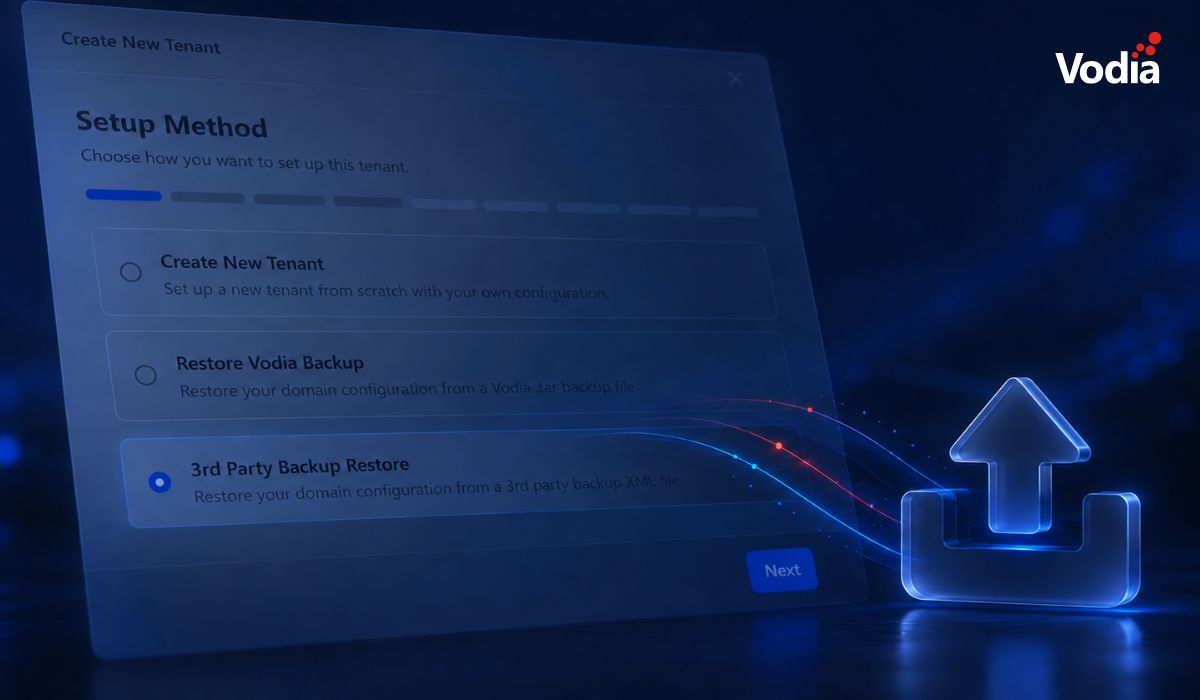
Switching phone systems doesn’t have to mean rebuilding everything from scratch. The Vodia PBX migration tool imports key configuration data from backups, including extensions, ring groups, queues, desk phones, and basic auto-attendant settings. Built into the Vodia Admin Portal, it guides administrators through the import process and reduces repetitive manual work, whether you’re moving 10 extensions or 1,000. Explore what transfers, what needs manual setup, and how the built-in tool reduces repetitive work when moving to Vodia.
.svg)