Vodia Networks utilizes Stripe as its payment processor for billing on its hosted PBX services, enabling both postpay and prepaid billing options for customers. This integration allows for seamless electronic transfers between a customer’s bank and Vodia, simplifying the payment process for users. By setting up various billing plans and assigning them to domains, administrators can effectively manage customer payments while ensuring sensitive payment information, such as credit card details, are securely handled through Stripe's infrastructure. This approach not only enhances billing efficiency but also strengthens data security and compliance with payment regulations.
How Stripe Payment Works. Stripe is a payment processor, which means it supports the electronic transfer of money from a customer’s bank (issuing bank) into a merchant’s bank (acquiring bank) as payment for goods or services bought with a credit card. Vodia uses Stripe for postpay or pre-pays on the Vodia hosted PBX. We will discuss how to set up your Stripe account with Vodia billing.
Setup up the billing plan
Navigate to the administrator, and click on “List” then Monthly Billing
Name your Plan.
Choose your Currency.
Create a Fix account along with a description and price for the plan.
For billing to work per domain, you’ll need to assign the newly created plan to a domain.
Navigate to your domain
Click on the
Scroll to Plan
Assign your new Plan and save
Adding a prepaid amount on the domain
Navigate to Settings —> General Settings
Scroll down to Billing Settings and credit for outbound calls and save
Stripe Billing
You’ll need to sign up with Stripe to acquire your Stripe API at https://stripe.com/. The API Keys will be used on the Vodia PBX billing section.
Adding your Stripe API Token
If you’re running the Vodia hosted edition. you can navigate to Monthly Billing under the administrator page. Navigate to Stripe settings.
Enter your Stripe public key and your Stripe secret Key under the Stripe Parameter. If you would like to send the monthly invoice manually, you can turn the feature on or off.
Adding the customer billing information
Navigate to your domain
Click on Advance
Choose Billing Settings
Enter the customer billing address (note: billing information will be sent to Stripe’s network)
Add the customer company card (note: all credit card information will not be saved on the Vodia PBX but sent to Stripe’s network)
Auto-Refill (here you can add an automatic charge for the customer)
Current account credit is added on the domain as shown above
Add a charge amount
Add a minimum account balance and save
If you have any questions, please send us an email, support@vodia.com.
Following a critical PHP security advisory affecting installations worldwide, we temporarily restricted public access to some of our backend services while carrying out necessary upgrades. Access has now been restored, and the affected services are operating normally. The Vodia PBX itself does not use PHP and was not directly affected. We explain what happened, the changes to legacy licensing and TLS support, and why customers running older PBX versions should contact us for upgrade guidance.
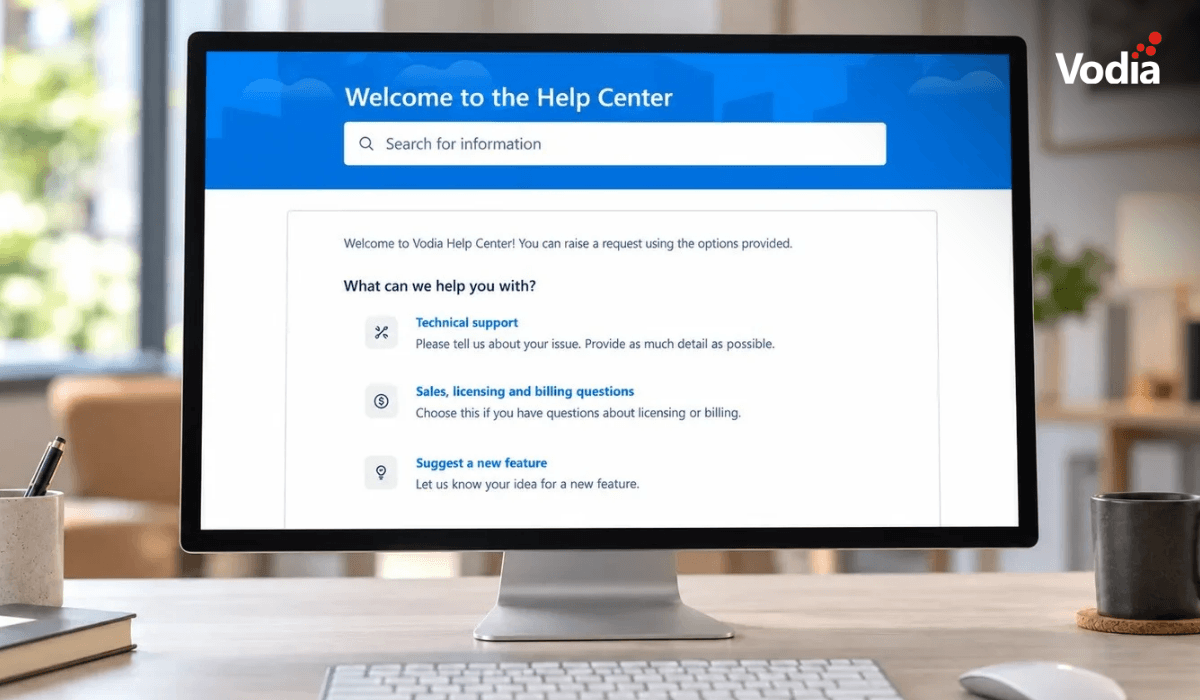
Submitting a support ticket with the right information helps our team understand your issue and reduces follow-up questions. This step-by-step guide walks you through the Vodia Help Center, from describing the problem and attaching diagnostic files to setting the business impact and providing your PBX details. You’ll also learn which call details and timestamps to include, alongside practical tips to keep troubleshooting focused and help our support team investigate your issue more efficiently.
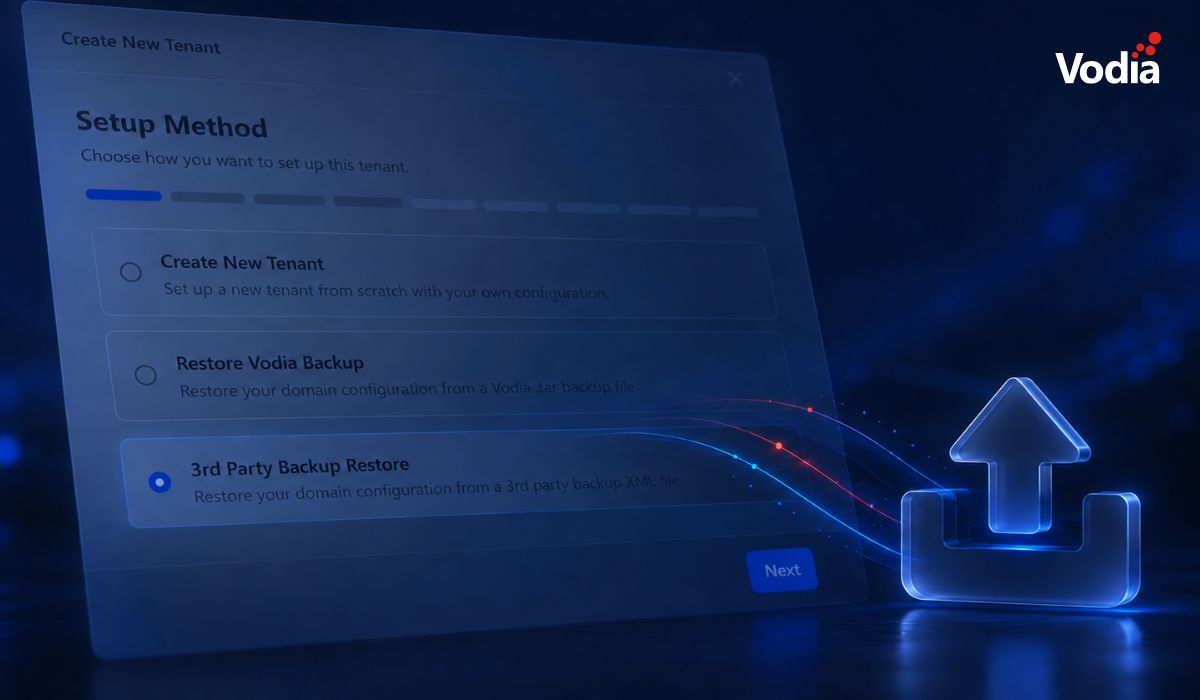
Switching phone systems doesn’t have to mean rebuilding everything from scratch. The Vodia PBX migration tool imports key configuration data from backups, including extensions, ring groups, queues, desk phones, and basic auto-attendant settings. Built into the Vodia Admin Portal, it guides administrators through the import process and reduces repetitive manual work, whether you’re moving 10 extensions or 1,000. Explore what transfers, what needs manual setup, and how the built-in tool reduces repetitive work when moving to Vodia.
.svg)