Embrace Unparalleled Digital Diversity and Secure Data Ownership with the Vodia PBX
Published on:
June 3, 2025
Vodia gives you full control over your communications with operating system independence, multi-cloud VoIP capability, and complete data ownership. Whether you deploy on-premise, in your own data center, or across major cloud platforms like AWS or Azure, Vodia’s flexibility ensures resilience, scalability, and freedom from vendor lock-in. With support for multiple OS environments and features like zero-touch provisioning and redundant SIP trunks, it’s a future-proof solution built for secure, adaptable business communications.
In an era of increasing digital dependency, Vodia is a beacon of control and flexibility. Unlike solutions that lock customers into the infrastructure of a single cloud provider, Vodia empowers you to deploy our best-in-class multi-tenant PBX on your terms, which means you retain complete ownership of your customers’ data, ensuring security and peace of mind. Whether you prefer the control of on-premise servers, the scalability of any Linux or Windows cloud provider, the dedicated environment of your own data center, or even the hands-on approach of a small office/home office (SOHO), Vodia adapts to your infrastructure needs without compromising on data ownership or flexibility.
Unmatched Operating System Versatility for Enhanced Resilience
Vodia's commitment to flexibility extends to its operating system compatibility. Thanks to its support of a broad spectrum, including CentOS, Debian, Ubuntu, and Windows, Vodia allows you to deploy your PBX across multiple operating systems, building a diverse and resilient infrastructure. This strategic approach, echoing the wisdom of "please stop planting only corn," minimizes the risks associated with single-OS dependence; by developing expertise across multiple operating systems, you build a robust, adaptable infrastructure. Should one OS experience a disruption, you can seamlessly migrate to another, ensuring business continuity. Vodia's organized working directory simplifies data migration, a process documented in our backup guide.
Flexible Cloud and Hardware Deployment for Optimal Scalability
Vodia understands infrastructure needs vary. Whether you favor the control of on-premise hardware or the scalability of cloud solutions, our platform accommodates your preferences. Host our PBX on your own dedicated infrastructure, or choose from leading multi-cloud PBX hosting options including AWS, Azure, DigitalOcean, Google Cloud, and Linode. By strategically diversifying your cloud hosting across multiple providers, you enhance resilience and minimize the impact of potential outages. This approach supports organizations looking to deploy a VoIP system that prioritizes redundancy, performance, and cloud independence.
Redundant SIP Trunk and Device Sourcing for Uninterrupted Communication
Maintain uninterrupted communication for your customers by implementing a strategy of redundant SIP trunk providers. In the event of a service disruption with one provider, your customers can seamlessly continue making and receiving calls through an alternative connection - adopt a diversified approach to phone vendor sourcing, taking into account geopolitical factors and supply chain considerations. By sourcing devices from multiple vendors across separate geographic locations, you mitigate the risks associated with single-vendor dependence. Vodia streamlines device deployment with zero-touch provisioning for a wide range of leading VoIP Providers, including Fanvil, Grandstream, Htek, Poly, snom, and Yealink, among many other outstanding brands.
Complete Data Ownership and Software Independence for Future-Proofing
With Vodia, you retain complete, uncompromised ownership over your VoIP data: you have the freedom to extract and migrate your information to another PBX platform at any time, which gives you control and flexibility. While we’re confident in the long-term value and stability of our platform, we empower our users with the ability to choose. Vodia's strategic global presence, with offices located across APAC, the European Union, and the USA, ensures you receive white-glove support and benefit from our dedication to innovation and stability. If your business is looking to future-proof its communication infrastructure, Vodia delivers full PBX ownership, flexible deployment, and global reliability.
We built the Vodia phone system from the ground up to meet the diverse infrastructure needs of our customers. Looking to modernize your communications with operating system independence, multi-cloud VoIP capability, and total data ownership? We’d be delighted to tell you more. Reach us at sales@vodia.com, or call us at +1 (617) 861-3490 (United States), +61 2 7201 0788 (APAC), or +49 30 555 78749 (Europe).
Apps have changed how businesses communicate and work, but every digital experience still depends on physical hardware. From smartphones, desk phones, and headsets to networking equipment and cloud servers, reliable infrastructure supports productivity, security, and call quality. Here’s why hardware still matters in an app-first world and what businesses should consider when choosing dependable devices and secure connectivity for the office, hybrid teams, and remote work, while preparing for evolving technology.
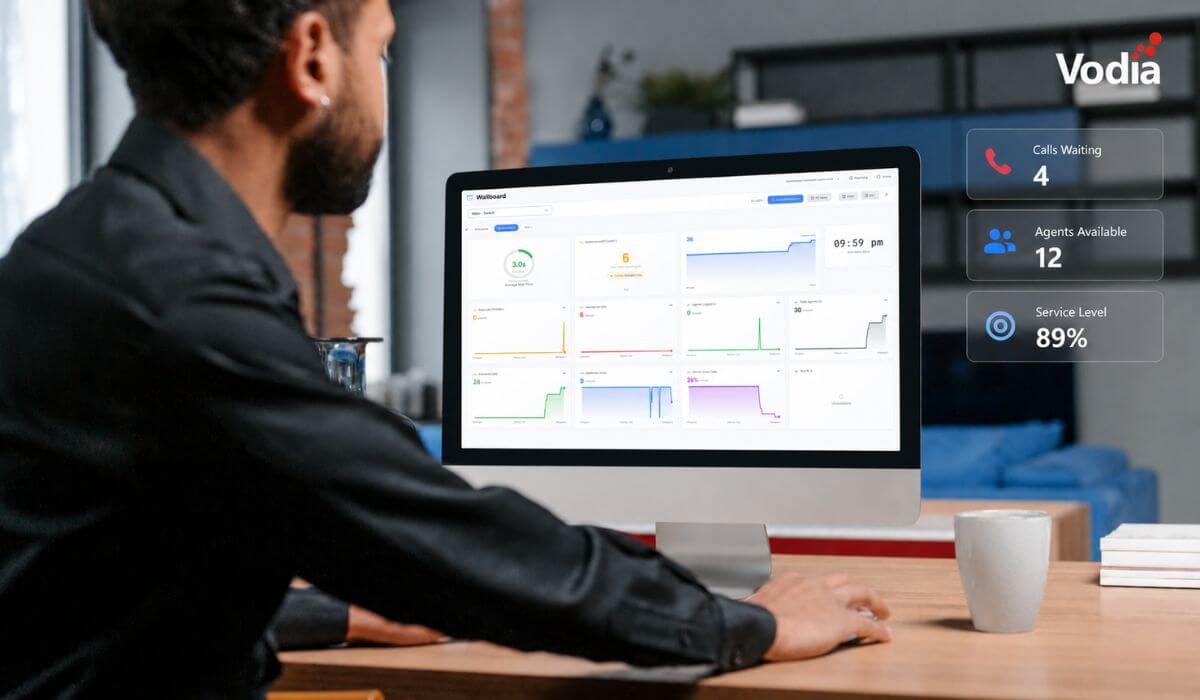
Vodia Wallboards gives supervisors, contact centers, service providers, and operations teams a self-hosted, real-time view of Vodia call queue activity. Monitor waiting, ringing, and active calls; agent availability; service levels; abandoned calls; and queue trends across one or more Vodia PBX systems. Start with a ready-made layout or build a custom wallboard using queue filters, live widgets, AI summaries, and alerts. Display the information your teams need in a browser, on an operations dashboard, or on a dedicated TV screen.
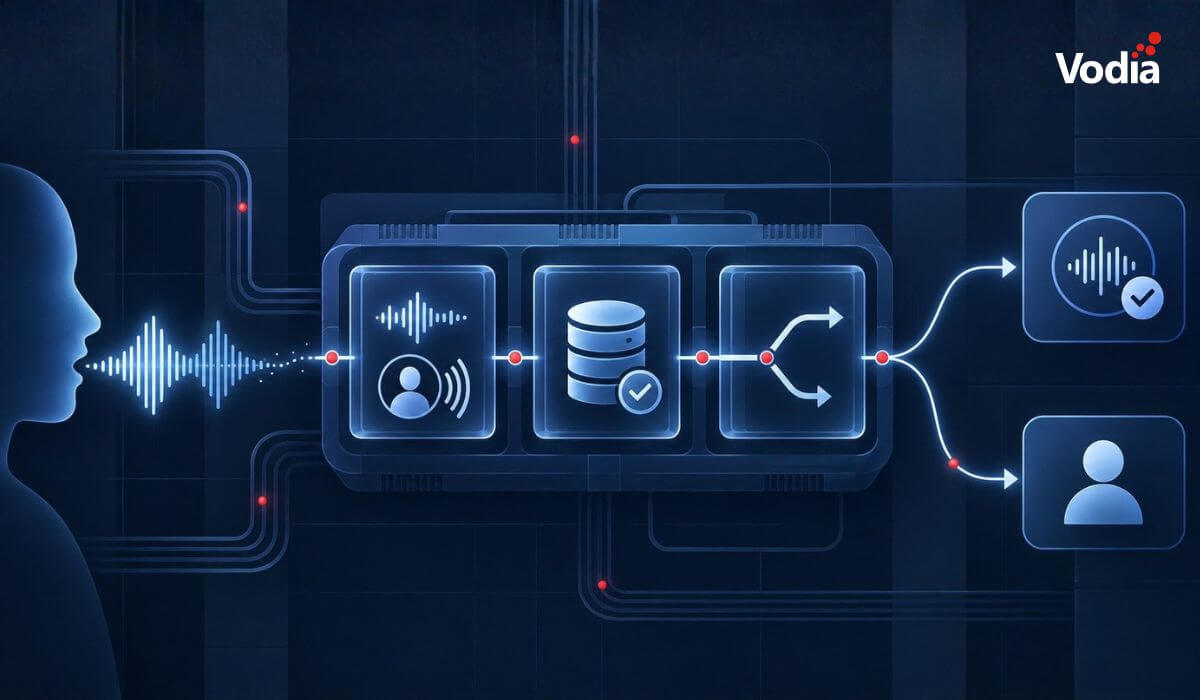
AI-powered calling gives businesses new ways to manage conversations, improve availability, and respond to callers more efficiently. It also introduces important questions about transparency, consent, privacy, data handling, and accountability. Organizations need clearly defined boundaries for what a Voice Agent may answer, which systems it can access, and when identity verification or human assistance is required. A thoughtful deployment balances automation with appropriate safeguards, helping businesses use conversational AI confidently while protecting callers and maintaining trust.
.svg)