Even in 2025, area codes remain important for personal and business communications. People move frequently but usually keep their original phone numbers because changing them is inconvenient and tied to banking, two-factor authentication, and multiple online accounts. For PBX administrators, area codes are essential for routing calls accurately, displaying the correct caller ID, and managing costs. Vodia PBX simplifies area code management with pattern-based dial plans, automatic updates, and smart trunk selection. This ensures that calls reach the right destination efficiently, maintain a local presence to increase pickup rates, and provide reliable communication both in North America and internationally.
Here in 2025, we tend to move around a lot. School, work, family…You can often tell where someone has been by the area code in their number: 415? San Francisco. 202? Washington, DC. 305? Sunny South Florida.
Despite our increasing mobility, most people hang on to their phone numbers for life. Changing a number is inconvenient, especially when it’s tied to two-factor authentication, banking, and dozens of other types of digital accounts, such as Amazon. So the area code stays, a numeric remnant from where we once lived.
For PBX administrators, however, area codes are anything but outdated: they’re essential to the routing, billing, and display of calls, especially in North America. That’s why the Vodia PBX features a comprehensive area code management system, to make sure your calls get where they’re going, with the right caller ID, every time.
Why Area Codes Still Matter
While smartphones dial a full number, including the area code, by default, PBX systems need to distinguish between local, toll-free, premium, or restricted numbers. In the USA and Canada, the North American Numbering Plan (NANPA) still governs hundreds of geographic and non-geographic codes. And each type of number can have different costs or restrictions.
The Vodia phone system makes this simple, without having to manually list area codes in every dial plan: with patterns like 212|617|781, you can use smart tags such as [usa]xxxxxxx, [fre]xxxxxxx, or [haw]xxxxxxx that reference our maintained areacodes.xml file. This file is updated automatically by the system, so you don't have to worry about keeping track of area code changes.
The Vodia PBX also includes support for non-geographic codes such as toll-free numbers [fre], premium-rate numbers [pre], and codes for territories like Puerto Rico [pue], the US Virgin Islands [vir], and the Dominican Republic [dom]. This allows you to configure outbound call behavior more precisely, so you don’t have to contend with unexpected costs or blocked calls.
Smart Trunk Selection Based on Area
The PBX doesn't just route calls correctly - it also selects the most appropriate originating number. Each trunk number can be assigned a list of area codes; when the system detects a match, it uses that number to create a local presence. For example, if you're calling a number in Boston, Vodia can automatically select a 617 or 857 number for the ANI.
This creates a local experience for the caller and also increases pickup rates, while enabling administrators to avoid extra costs or regulatory issues when calling outside a defined service area.
A nationwide customer support center deploying the Vodia PBX can automatically present a local number when calling customers across the country. If the destination number is in Chicago, for example, the PBX selects a 312 or 773 ANI (Automatic Number Identification, the caller ID displayed to recipients) from the available pool. This doesn’t require any manual setup.
Pattern Matching Made Easy
With Vodia’s pattern-based dial plans, there’s no need to manage hundreds of entries by hand. The [usa], [can], [haw], and other tags match entire groups of area codes. This reduces dial plan complexity while minimizing routing errors.
Not Just for North America
Area codes are still relevant in many countries outside NANPA, and Vodia supports countries with fixed or variable-length area codes (such as Germany). Our phone system uses the full international format, such as +49, and matches any area code without leading zeroes, for accurate routing worldwide - and for every call.
Area code handling is just one of the functions of our feature-rich, scalable, secure cloud phone system. Whether you need local presence across the U.S. or reliable routing internationally, Vodia PBX makes area code management effortless. Discover how our system can optimize your calls - contact us at sales@vodia.com, or call +1 (617) 861-3490.
Apps have changed how businesses communicate and work, but every digital experience still depends on physical hardware. From smartphones, desk phones, and headsets to networking equipment and cloud servers, reliable infrastructure supports productivity, security, and call quality. Here’s why hardware still matters in an app-first world and what businesses should consider when choosing dependable devices and secure connectivity for the office, hybrid teams, and remote work, while preparing for evolving technology.
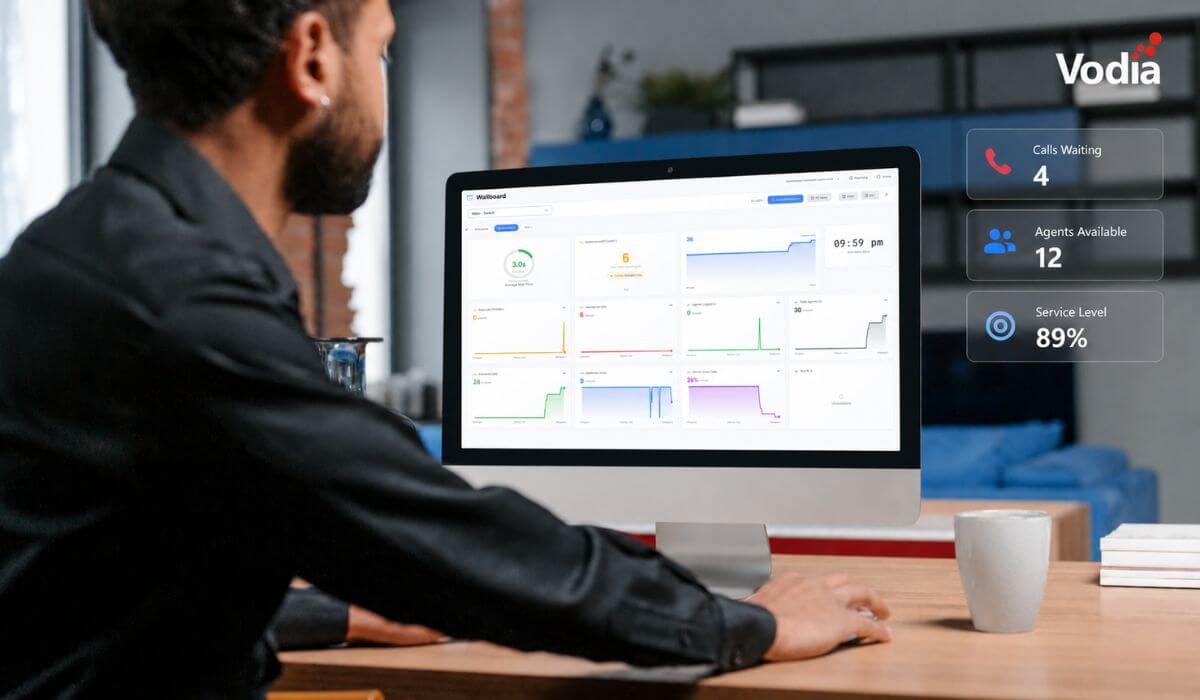
Vodia Wallboards gives supervisors, contact centers, service providers, and operations teams a self-hosted, real-time view of Vodia call queue activity. Monitor waiting, ringing, and active calls; agent availability; service levels; abandoned calls; and queue trends across one or more Vodia PBX systems. Start with a ready-made layout or build a custom wallboard using queue filters, live widgets, AI summaries, and alerts. Display the information your teams need in a browser, on an operations dashboard, or on a dedicated TV screen.
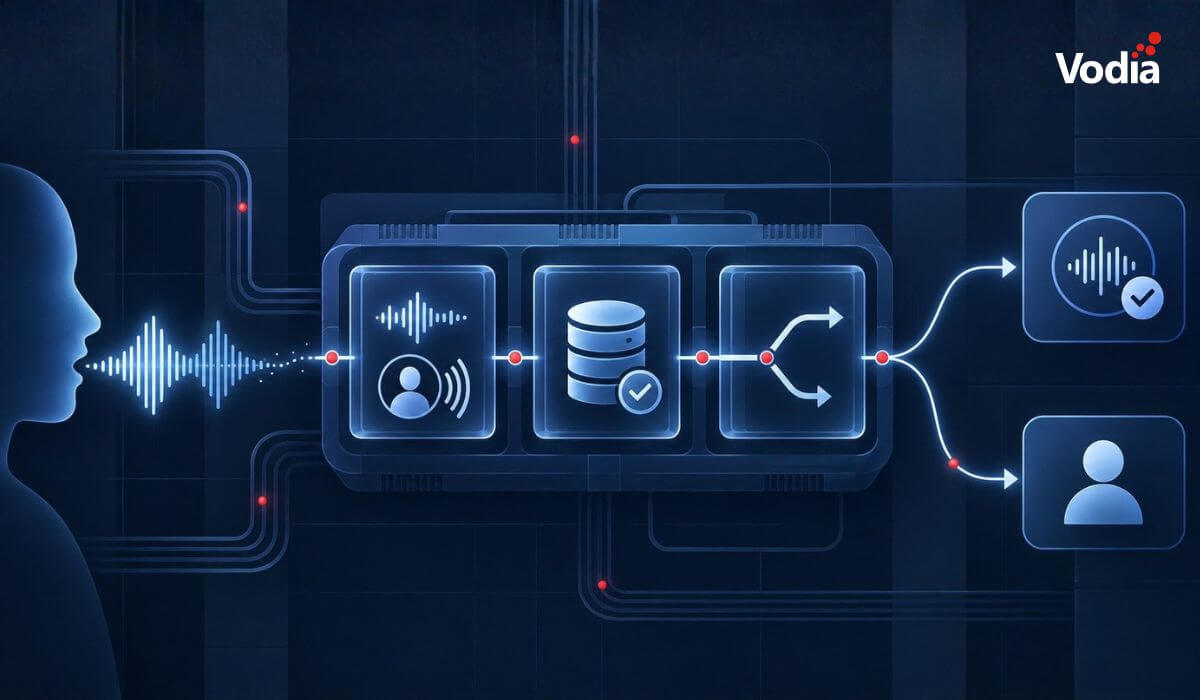
AI-powered calling gives businesses new ways to manage conversations, improve availability, and respond to callers more efficiently. It also introduces important questions about transparency, consent, privacy, data handling, and accountability. Organizations need clearly defined boundaries for what a Voice Agent may answer, which systems it can access, and when identity verification or human assistance is required. A thoughtful deployment balances automation with appropriate safeguards, helping businesses use conversational AI confidently while protecting callers and maintaining trust.
.svg)