It used to be just spam emails – how many do you receive per day from Nigerian princes, area singles and stockbrokers trying to sell you the best deal on the market? Plenty, of course. But what used to be a nuisance is now (mostly) confined to your spam folder, thanks to email filters. But what about spam calls, also known as robocalls? How many do you receive per day?
A robocall uses auto-dialing software to send a pre-recorded message to millions of people. Often used for formal announcements and telemarketing, they are also an outstanding platform for spam calls.
In the USA, each of us receives on average 17 spam calls per day. The bigger picture? In August 2023, American consumers received 5.46 billion robocalls! The number fluctuates monthly yet remains in the billions. According to the YouMail Robocall Index, in November 2023 U.S. numbers received more than 4.5 billion robocalls, which is just below the average of 4.7 billion every month. Breaking down the numbers, there were 150.2 million robocalls per day in the USA in November, 1,738 per second!
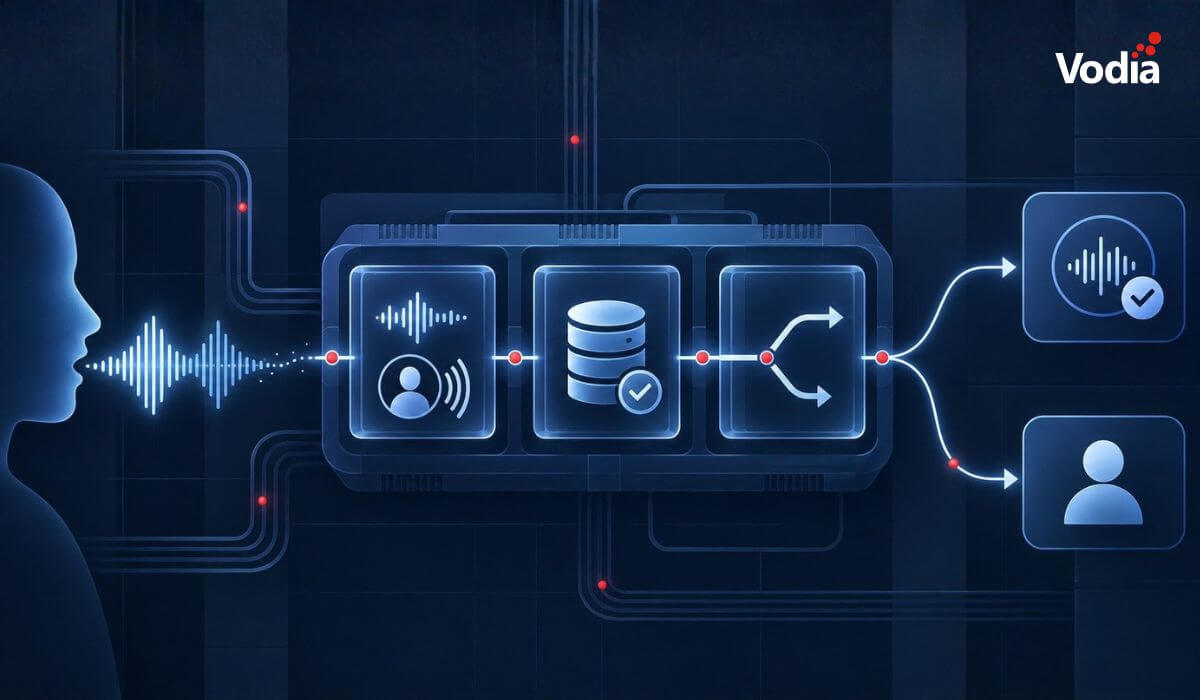
The Vodia phone system gives you an umbrella to use in this constant storm of spam calls – our PBX gives you several defense mechanisms, depending on the type of call. Before taking any action, the PBX must determine if a call is a suspected SPAM call and thus follows these rules:
- Anonymous calls are always considered SPAM calls
- Internal calls from another extension are never considered SPAM calls
- For tagging calls with a caller-ID: You can use TrueCNAM or Tellows as the external SPAM provider, or you can use the address book to mark a specific caller-ID for blocking
For calls directly to an extension, the Vodia PBX gives you these options:
- ‘No special treatment’ means the call is processed normally
- ‘Reject call’ means the call is rejected outright
- ‘Send to mailbox’ sends the call to the mailbox
- ‘Pretend to be busy’ applies the rules for a busy extension, which could, for example, trigger redirection on busy
- ‘Ask for name’ triggers the call screening process where the caller first needs to leave a name; the name will be read to the extension before the user can make a decision as to how to proceed
- You can also set the screening process to be performed for all calls, even if they aren’t considered SPAM
For calls to the ACD and to the hunt group, you can specify a destination to which calls should be redirected; this destination can be another ACD or hunt group, a mailbox, an auto-attendant or anything else you select.
There will be approximately $58 billion subscriber loss because of unwanted robocalls this year. By deploying the Vodia phone system you can minimize the amount of spam calls your organization receives and create a more peaceful, more secure communication environment with fewer unnecessary disruptions. Find out more – contact us at sales@vodia.com or call us directly at+1 (617) 861-3490. We’ll happily take your call.
About Vodia Networks, Inc.
Vodia Networks, Inc. is a pioneering provider of B2B Cloud Communications Solutions catering to enterprises, contact centers and service providers. Vodia’s PBX software boasts an extensive suite of business telephony features for on-premise and cloud-based systems and operates seamlessly across Windows, Linux or Mac platforms. Fully compliant with SIP industry standards, the Vodia phone system integrates effortlessly with a wide range of SIP-based devices and trunking providers, granting ultimate freedom in telephony. Vodia’s multi-tenancy platforms are compatible with an unprecedented number of technologies, including desk phones, softphones and APIs, for myriad third-party software and CRM systems. Our mission is to empower our partners and end-users with the world’s best cloud PBX and personalized support to ensure their success at every turn. Visit Vodia on LinkedIn, Twitter and YouTube.
.svg)