Vodia PBX now enables users to schedule reports beyond daily intervals - the PBX now supports weekly, monthly, and quarterly options. Reports can be combined, such as “0:00/week 0:00/month,” to send both weekly and monthly reports at midnight. Caution is necessary, however, when scheduling quarterly reports on busy systems (due to performance concerns). The web interface now offers period selection for reports, such as the current or previous day, week, or month. While this simplifies report generation, large systems should be mindful of potential slowdowns when accessing large amounts of data. The "Try" button continues to generate daily reports.
A common requirement for PBX systems is to generate reports. Many of those reports are generated daily. The Vodia PBX offers such reports for ACD and other accounts at midnight, where “midnight” was a term that could be specified in a field in which the the email address for the report had to appear.
Interestingly, it was already possible to specify more than one time when the report should be generated. We are now building on this possibility and extending it beyond the day.
The old syntax just accepted the time of day (in 24-hour format) when the report should be generated. Because the PBX checks every 15 minutes, it had to be in 15-minute intervals (like 3:45). We have now extended that format to accept either the weekday (“sun”, “mon”, … “sat”) or just “week” for Sunday. It's also possible to use “month” for monthly reports and “quarter” for quarterly reports.
It's also possible to combine those reports. For example, “0:00/week 0:00/month” will send both weekly and monthly reports at midnight.
It should be noted that sending out a quarterly report on very busy systems is not a good idea, as it will cause the PBX to perform a table scan on all CDR records, which can take minutes before that process is completed.
The “Try” button will always generate daily reports.
We have also taken the concept into the web interface. The domain ACD page, where you can see agent activity, now also includes a new button for the selection of the period that should be reported. By default it's the current day, but you can select the previous day, the previous week (assuming the week starts on Sunday), the current month and the previous month.
As with the midnight CDR, you need to be careful when loading the whole month of CDR if you have very busy systems. The system limits the search to the current ACD, but if there are millions of CDR this will keep the system busy for a few seconds.
The login stat below the Agent activity and the call dropout report is always per day. This is something we might address in future versions—one of the main challenges is to display agents that use the login and logout a lot without filling up the whole screen.
Following a critical PHP security advisory affecting installations worldwide, we temporarily restricted public access to some of our backend services while carrying out necessary upgrades. Access has now been restored, and the affected services are operating normally. The Vodia PBX itself does not use PHP and was not directly affected. We explain what happened, the changes to legacy licensing and TLS support, and why customers running older PBX versions should contact us for upgrade guidance.
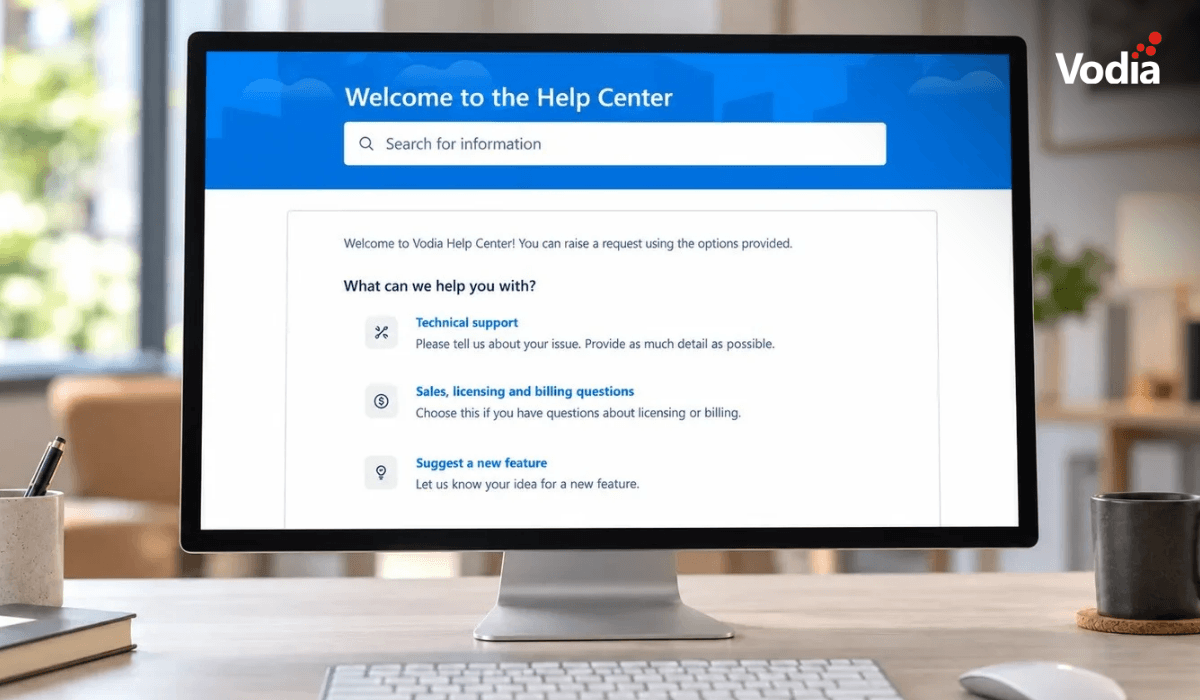
Submitting a support ticket with the right information helps our team understand your issue and reduces follow-up questions. This step-by-step guide walks you through the Vodia Help Center, from describing the problem and attaching diagnostic files to setting the business impact and providing your PBX details. You’ll also learn which call details and timestamps to include, alongside practical tips to keep troubleshooting focused and help our support team investigate your issue more efficiently.
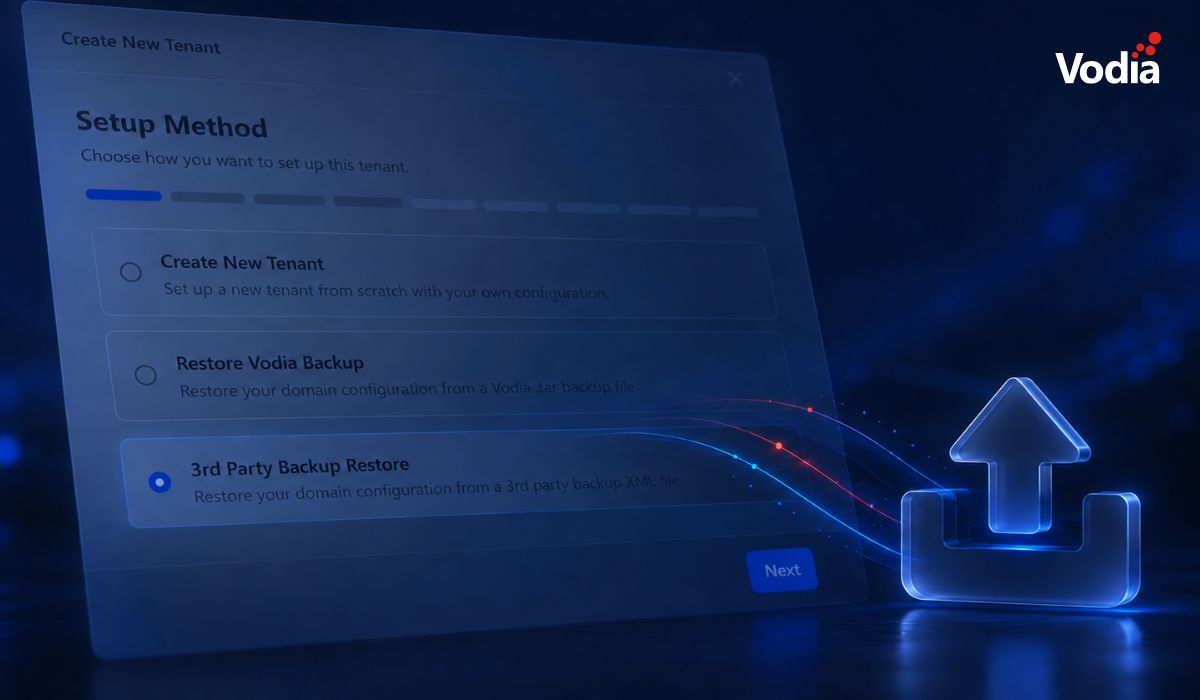
Switching phone systems doesn’t have to mean rebuilding everything from scratch. The Vodia PBX migration tool imports key configuration data from backups, including extensions, ring groups, queues, desk phones, and basic auto-attendant settings. Built into the Vodia Admin Portal, it guides administrators through the import process and reduces repetitive manual work, whether you’re moving 10 extensions or 1,000. Explore what transfers, what needs manual setup, and how the built-in tool reduces repetitive work when moving to Vodia.
.svg)