In March of 2022, we published a blog post, “The End Is Nigh for Copper Wires.” The August 2, 2022 date referenced in that article marked the end of an FCC transition period for certain wholesale telephone services, rather than a nationwide deadline for replacing all POTS lines. Copper retirement continues, with timelines varying by provider and location.
FCC Action to Streamline the Process for Retiring Copper Networks
In March 2026, the Federal Communications Commission (FCC) announced action to streamline the process for retiring aging copper networks and moving customers toward newer, high-speed infrastructure. According to the announcement, this “will allow providers to retire their decades-old and increasingly expensive copper line networks, freeing up tens of billions of dollars annually for the rollout of upgraded, high-speed
networks to more Americans.”
According to the DataRemote Copper Retirement Bulletin, an FCC report released on November 2, 2026, counted 13.5 million remaining end-user switched-access lines as of December 31, 2025, down from 15 million six months earlier.
Major Telecom Discontinuations
According to DataRemote’s November 6, 2026, bulletin:
- AT&T reported discontinuing copper service in more than 500 communities covering 1.3 million locations.
- The FCC has authorized AT&T to discontinue legacy POTS for approximately 90,000 customers in portions of more than 1,000 wire centers in 18 states on or after November 15, 2026.
- Companion applications covering Remote Call Forwarding and copper-only AT&T Phone service add Illinois, and a further application deemed granted in September adds business POTS in six of these states for the same date, for a total of 19 states.
- Verizon has applied to discontinue copper POTS beginning November 30 of this year in 750,000 locations. As of the bulletin’s publication, this was a requested date, pending FCC approval.
These dates apply to specific service areas, rather than entire states. Businesses should check their provider’s notices to confirm whether their lines are affected.
The best replacement for POTS is VoIP
One of your best options is to make the transition to a Voice over Internet Protocol PBX (Private Branch Exchange) and move your phone system to the cloud. What are the benefits?
A cloud PBX is an ecosystem and a foundation for every facet of your business communication. A PBX designed for business communication should give your organization:
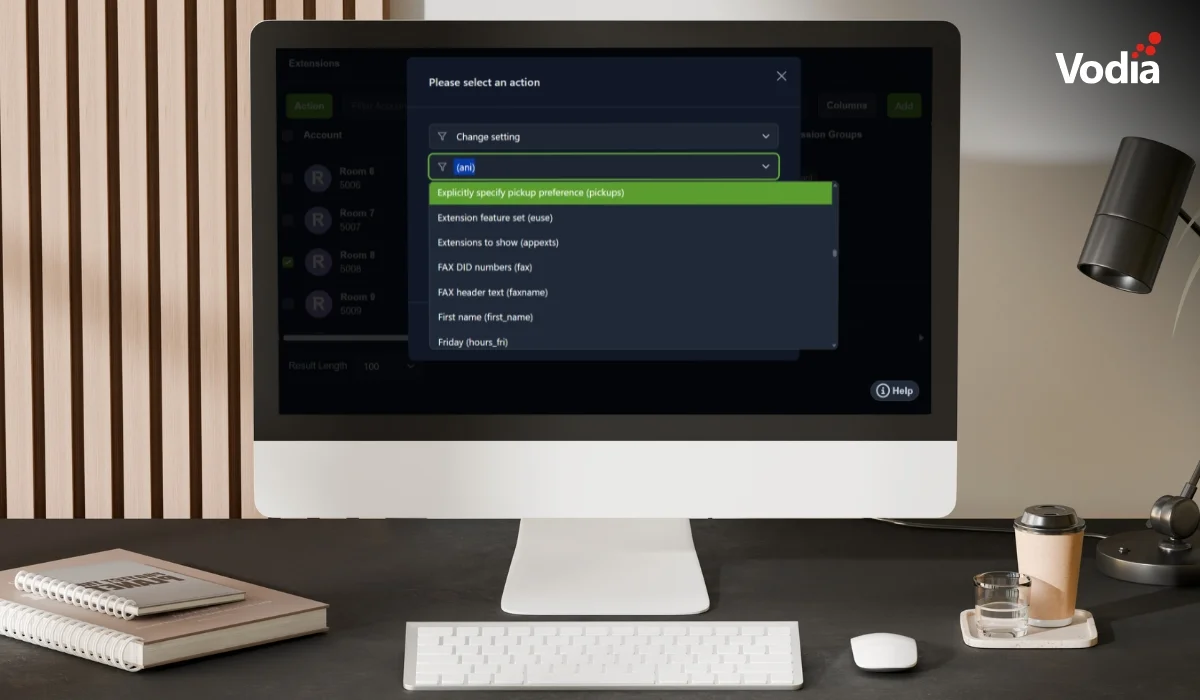
- an easy-to-use admin interface
- analytics and reporting
- auto attendant and interactive voice response (IVR)
- call queues and routing
- call recording
- centralized provisioning
- conferencing
- custom dashboards
- data security
- emergency alerts
- integrated AI voice agents for both inbound and outbound communication
- integration with Jitsi Meet, Microsoft Teams, and WhatsApp
- integration with third-party software
- scalability for more than a thousand concurrent calls per server
- separation of business and personal calls
- voicemail to email transcription
- WebRTC integration
Before migrating, businesses should identify everything connected to their POTS lines. Alarm systems, elevator phones, fax machines, and other specialist equipment may require dedicated replacement solutions. Connectivity, backup power, emergency calling, and number porting should also be considered.
With over 15 years of experience in providing telephone system software across the globe, Vodia has established itself as an industry leader in the provision of unified communication systems for businesses of every size worldwide. We work with companies across diverse industries, providing them with the features and functionality they need to support real employee collaboration and peerless customer service.
On your way to shedding your POTS lines? Get in touch with us at sales@vodia.com or +1 (617) 861-3490 to discuss your business phone system.